
What Are Industrial Cleaning Machines and Why Every Factory Needs Them
Blog Summary
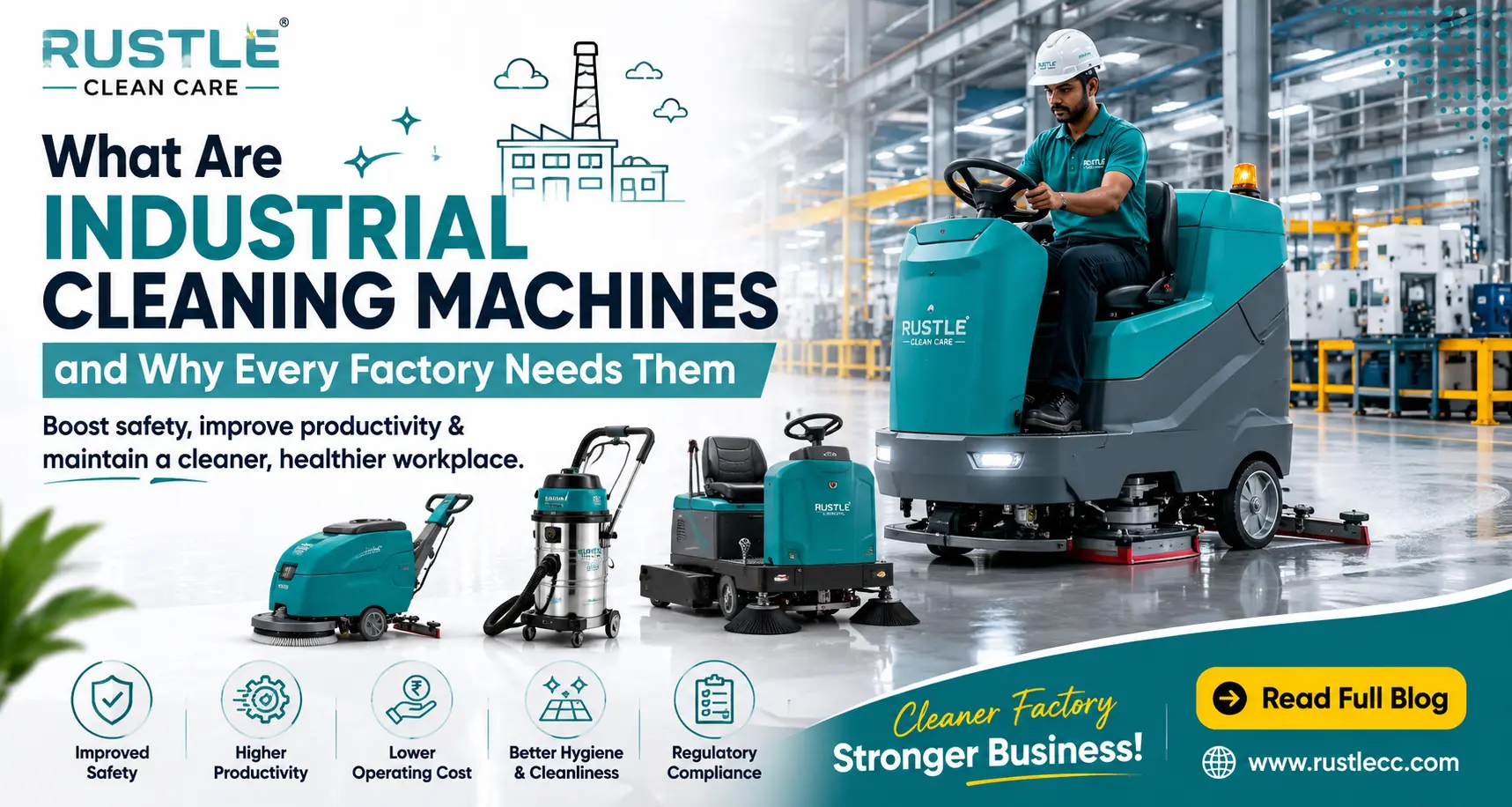
Industrial cleaning machines have become an essential part of modern manufacturing facilities, helping businesses maintain cleaner, safer, and more productive workplaces. From scrubber dryers and industrial vacuum cleaners to sweepers and high-pressure washers, these machines reduce manual labor, save water, and improve cleaning efficiency. They also help factories comply with safety and hygiene standards while minimizing equipment downtime and maintenance costs. Industries such as automotive, pharmaceuticals, food processing, textiles, and engineering increasingly rely on mechanized cleaning solutions to enhance operational performance. Investing in the right industrial cleaning machine supports long-term cost savings and overall business growth.
Walk into a busy manufacturing facility at the end of a production shift, and you’ll likely find metal dust, oil stains, packaging waste, and debris scattered across the floor. Cleaning these areas manually takes time, increases labor costs, and often delivers inconsistent results.
For modern factories, cleanliness is no longer just about appearance. It directly affects employee safety, machine performance, product quality, and regulatory compliance.
Industrial cleaning machines have become an essential investment for manufacturers looking to maintain efficient and safe operations. Whether it’s an automotive plant in Chennai, a textile factory in Coimbatore, or a pharmaceutical unit in Hyderabad, mechanized cleaning is helping businesses save time and improve productivity.
What Are Industrial Cleaning Machines?
Industrial cleaning machines are specialized equipment designed to clean large commercial and manufacturing spaces quickly, effectively, and with minimal manual effort.
Unlike traditional mops and brooms, these machines can remove dust, grease, liquids, metal shavings, and stubborn dirt while covering extensive floor areas in a short period.
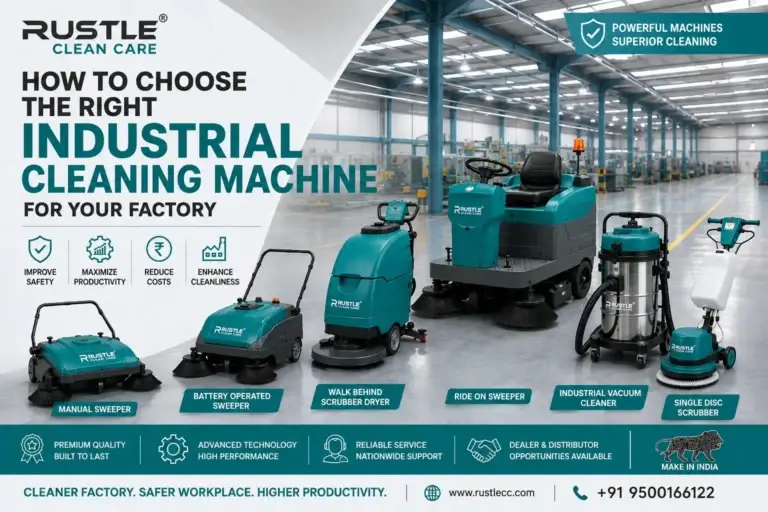
Common Types of Industrial Cleaning Machines
| Machine Type | Primary Use |
|---|---|
| Scrubber Dryer | Washing and drying hard floors |
| Sweeper Machine | Collecting dust and dry debris |
| Industrial Vacuum Cleaner | Removing fine dust and waste |
| High Pressure Washer | Cleaning machinery and outdoor surfaces |
| Single Disc Scrubber | Deep floor scrubbing and polishing |
| Ride-on Scrubber | Large factory and warehouse cleaning |
Factories operating multiple shifts often rely on a combination of these machines to maintain hygiene standards throughout the day.
Why Is Factory Cleaning More Important Than Ever?
Poor housekeeping can lead to unexpected expenses and operational disruptions.
Dirty floors and production areas may cause:
- Workplace accidents
- Equipment failures
- Product contamination
- Increased maintenance costs
- Lower employee morale
Studies consistently show that well-maintained workplaces experience fewer safety incidents and improved operational efficiency. Manufacturers following lean production practices also recognize cleaning as a key component of continuous improvement.
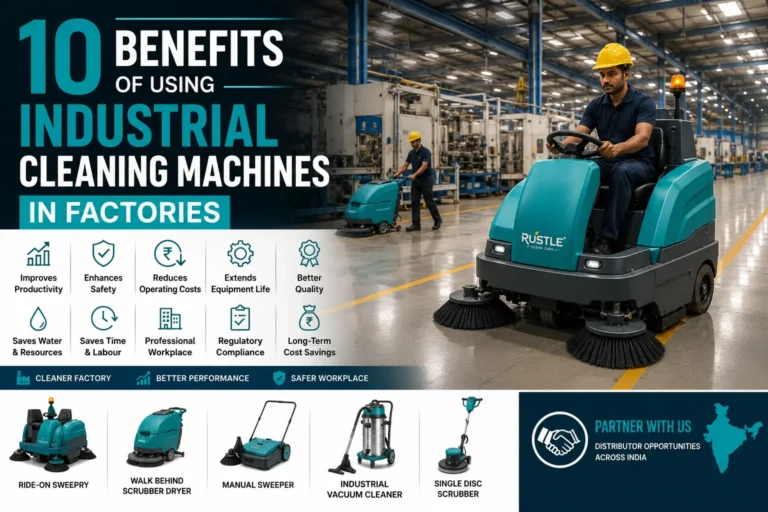
Types of Industrial Cleaning Machines Used in Factories
Scrubber Dryers
Scrubber dryers wash, scrub, and dry floors simultaneously.
They are widely used in:
- Automotive manufacturing plants
- Pharmaceutical facilities
- Food processing industries
- Warehouses
- Engineering workshops
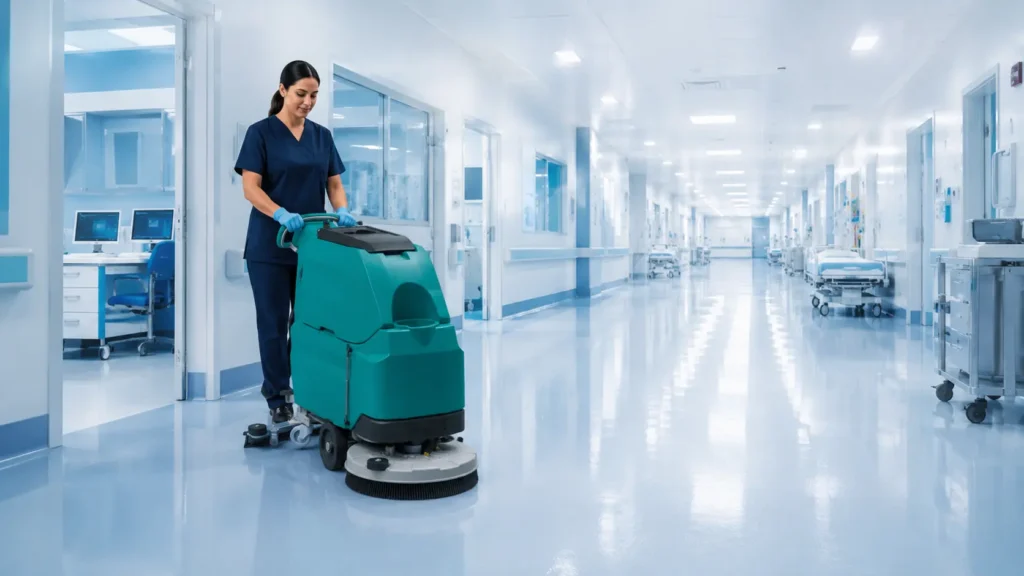
Walk-Behind Scrubber Dryers
Ideal for medium-sized facilities.
Advantages include:
- Easy maneuverability
- Lower investment cost
- Reduced water consumption
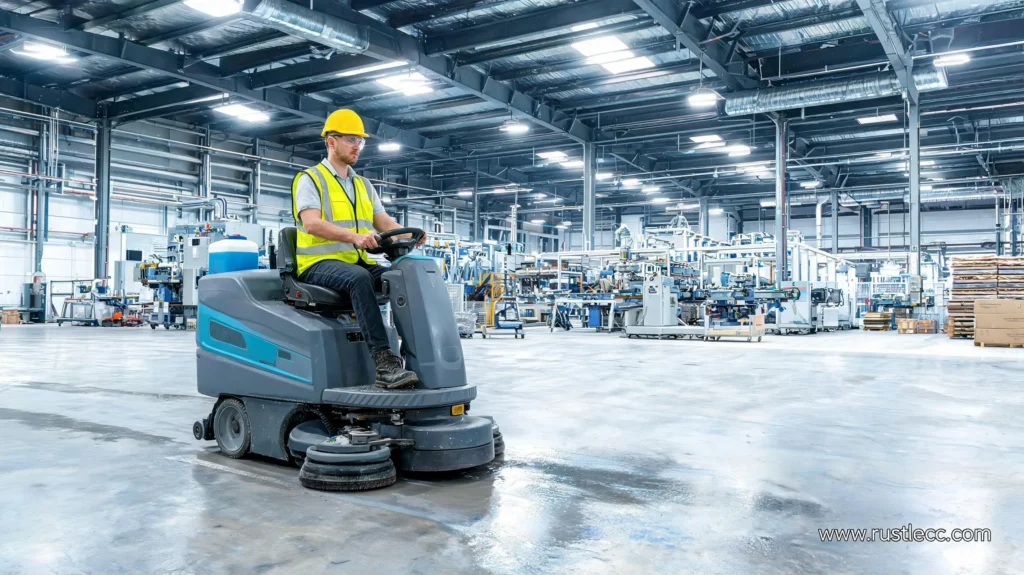
Ride-On Scrubber Dryers
Best suited for large industrial areas.
Benefits include:
- Faster cleaning cycles
- Lower labor requirements
- Increased operator comfort
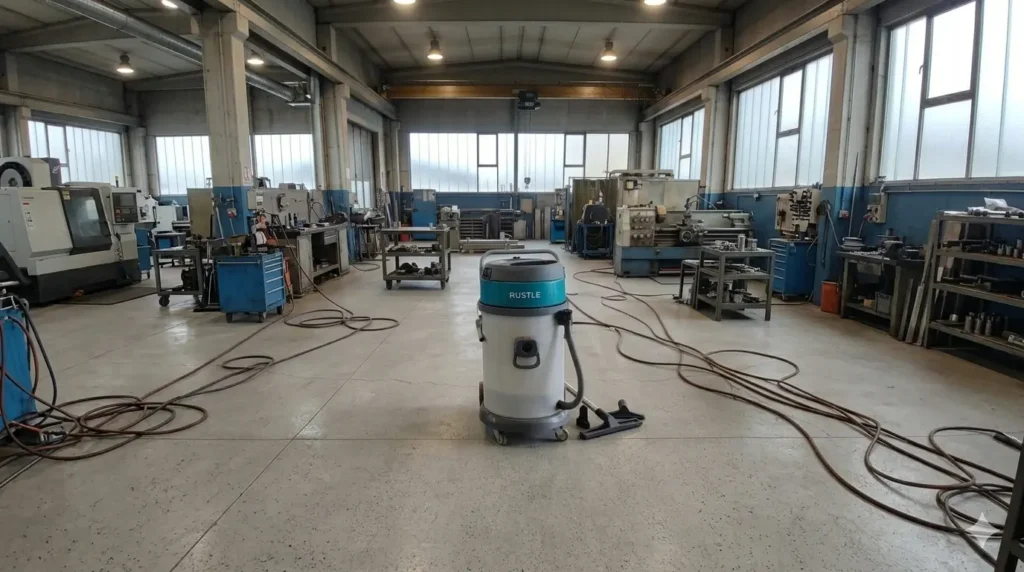
Industrial Vacuum Cleaners
Industrial vacuum cleaners are designed to handle fine particles, metal chips, powder residues, and liquid spills.
They are commonly used in:
- Electronics manufacturing
- Foundries
- CNC machining facilities
- Chemical industries
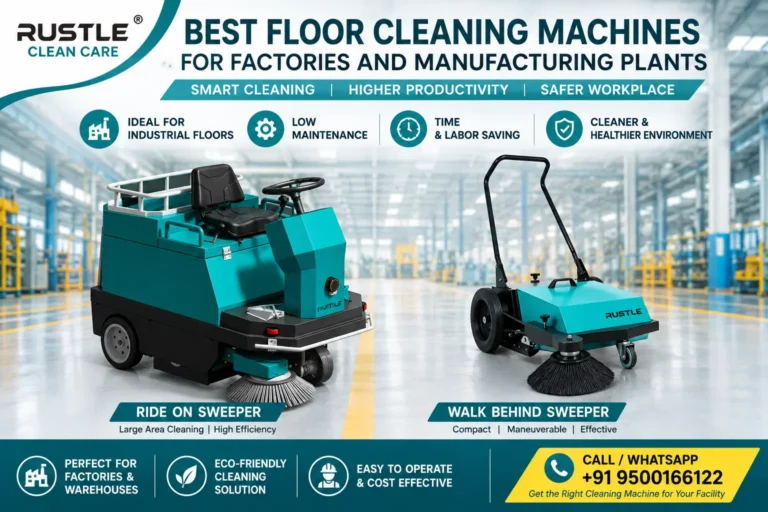
Sweeper Machines
Sweepers collect dry waste before it accumulates and affects production.
Typical applications include:
- Logistics hubs
- Packaging plants
- Textile factories
- Cement manufacturing facilities
High-Pressure Washers
Pressure washers remove stubborn contaminants such as:
- Grease deposits
- Oil stains
- Chemical residues
- Mud accumulation
They are frequently used for equipment maintenance and outdoor cleaning tasks.
Why Every Factory Needs Industrial Cleaning Machines
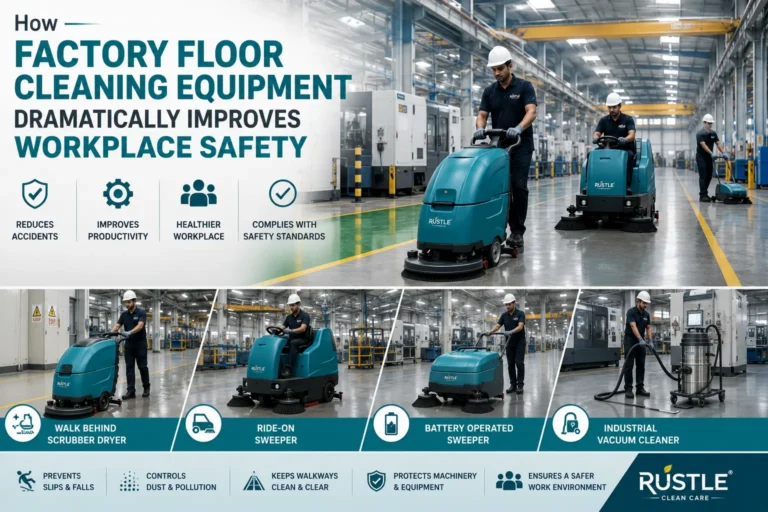
1. Improved Workplace Safety
Slippery floors remain one of the leading causes of workplace injuries.
Industrial scrubber dryers leave floors dry immediately after cleaning, reducing the chances of slips and falls.
Safety officers and EHS managers often recommend mechanized cleaning systems to maintain safer working environments.
2. Higher Productivity
Employees assigned to manual cleaning spend valuable production hours on non-core activities.
Industrial cleaning machines can clean several thousand square meters within an hour.
This enables maintenance teams to focus on preventive maintenance and critical operational tasks.
3. Better Product Quality
Dust contamination can affect sensitive manufacturing processes.
Industries such as pharmaceuticals, aerospace components, and electronics require strict cleanliness standards.
Vacuum systems and sweepers help maintain cleaner production zones.
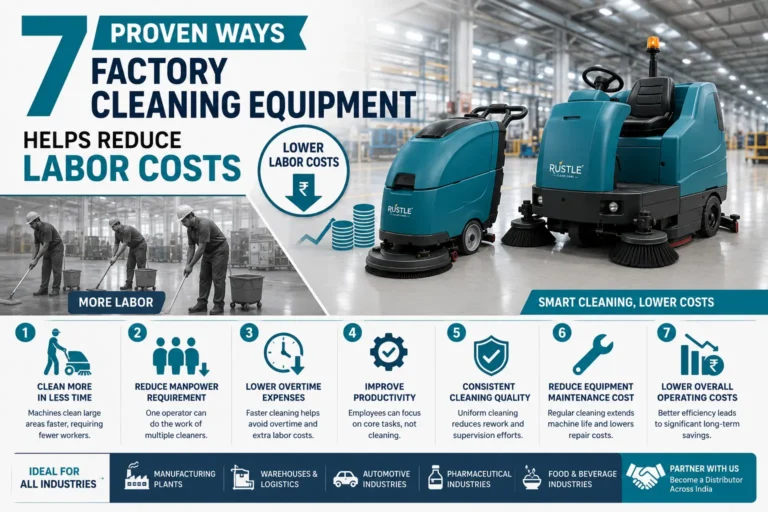
4. Reduced Operational Costs
Although purchasing industrial cleaning equipment involves an initial investment, long-term savings are significant.
Businesses often benefit from:
- Reduced labor dependency
- Lower detergent consumption
- Less machine downtime
- Extended floor lifespan
5. Compliance With Industry Regulations
Many industries must meet hygiene and safety standards.
Examples include:
- GMP regulations
- ISO standards
- Food safety requirements
- Occupational safety guidelines
Mechanized cleaning helps maintain compliance and simplifies inspections.
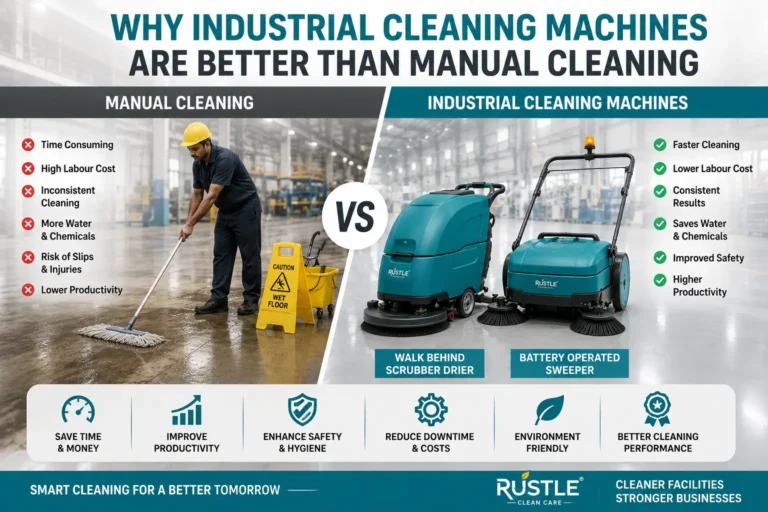
Industrial Cleaning Machines vs Manual Cleaning
| Factor | Manual Cleaning | Industrial Cleaning Machines |
|---|---|---|
| Cleaning Speed | Slow | Fast |
| Labor Requirement | High | Low |
| Water Usage | More | Controlled |
| Cleaning Quality | Inconsistent | Uniform |
| Drying Time | Long | Immediate |
| Operating Cost | High | Lower Over Time |
For factories operating around the clock, industrial machines deliver clear advantages.
How to Choose the Right Industrial Cleaning Machine
Step 1: Assess Floor Size
Large facilities benefit from ride-on scrubbers.
Small workshops may only require walk-behind models.
Step 2: Understand Waste Type
Different environments produce different contaminants.
Examples include:
| Industry | Common Waste |
|---|---|
| Automotive | Oil and grease |
| Textile | Fibers and lint |
| Pharmaceutical | Fine powder |
| Metal Fabrication | Metal chips |
| Food Processing | Organic residue |
Step 3: Evaluate Service Support
Before purchasing equipment, consider:
- Availability of spare parts
- Operator training
- Warranty coverage
- Technical assistance
Step 4: Consider Battery Technology
Battery-powered cleaning machines are becoming increasingly popular because they offer:
- Lower noise levels
- Zero emissions
- Better maneuverability
Autonomous and robotic scrubbers are also gaining attention among large manufacturing companies.
Real Example: Cleaning a Manufacturing Facility in Chennai
A medium-sized engineering company operating three shifts previously relied on manual labor for floor maintenance.
Cleaning took nearly four hours every day.
After switching to a ride-on scrubber dryer:
- Cleaning time dropped by 70%
- Water consumption reduced considerably
- Workers reported fewer slip hazards
- Production interruptions decreased
The company recovered its investment within a relatively short period through labor savings and increased efficiency.
Why Indian Manufacturers Are Moving Toward Mechanized Cleaning
Manufacturing facilities across India are expanding rapidly.
Factories in Chennai, Hosur, Coimbatore, Pune, Bangalore, Gujarat, and Hyderabad are adopting industrial cleaning equipment to support:
- Smart factory initiatives
- Lean manufacturing programs
- Sustainability goals
- Employee well-being strategies
Industry leaders continue investing in advanced scrubbers, sweepers, and automated cleaning technologies to improve facility performance.
9. Key Takeaways
Industrial cleaning machines improve safety and productivity.
They reduce labor costs and cleaning time.
Scrubber dryers are ideal for factory floors.
Vacuum cleaners help control dust contamination.
Mechanized cleaning supports regulatory compliance.
Proper machine selection depends on industry requirements.
10. Common Mistakes to Avoid
- Choosing machines based only on price
- Ignoring after-sales service availability
- Purchasing oversized equipment
- Skipping operator training
- Not considering battery runtime
- Using domestic vacuum cleaners in industrial environments
11. Expert Tips
Conduct a cleaning audit before purchasing equipment.
Schedule preventive maintenance.
Train operators regularly.
Use recommended brushes and detergents.
Evaluate total cost of ownership instead of purchase price alone.
Request a live demonstration before finalizing a machine.
12. Frequently Asked Questions
1. What is an industrial cleaning machine?
Industrial cleaning machines are heavy-duty equipment designed to clean factories, warehouses, and production facilities efficiently.
2. Which machine is best for factory floors?
Scrubber dryers are generally considered the most effective solution for cleaning factory floors.
3. Are industrial cleaning machines suitable for food industries?
Yes. Many scrubber dryers and vacuum systems are designed specifically for food-grade environments.
4. How much area can a ride-on scrubber clean?
Depending on the model, ride-on scrubbers can clean between 3,000 and 8,000 square meters per hour.
5. Do industrial cleaning machines reduce water usage?
Yes. Modern machines use controlled water dispensing systems that significantly reduce consumption.
6. What industries use industrial cleaning equipment?
Automotive, pharmaceutical, textile, engineering, food processing, electronics, chemical, and packaging industries.
7. How often should factory floors be cleaned?
High-traffic manufacturing facilities should ideally be cleaned daily or after every production shift.