
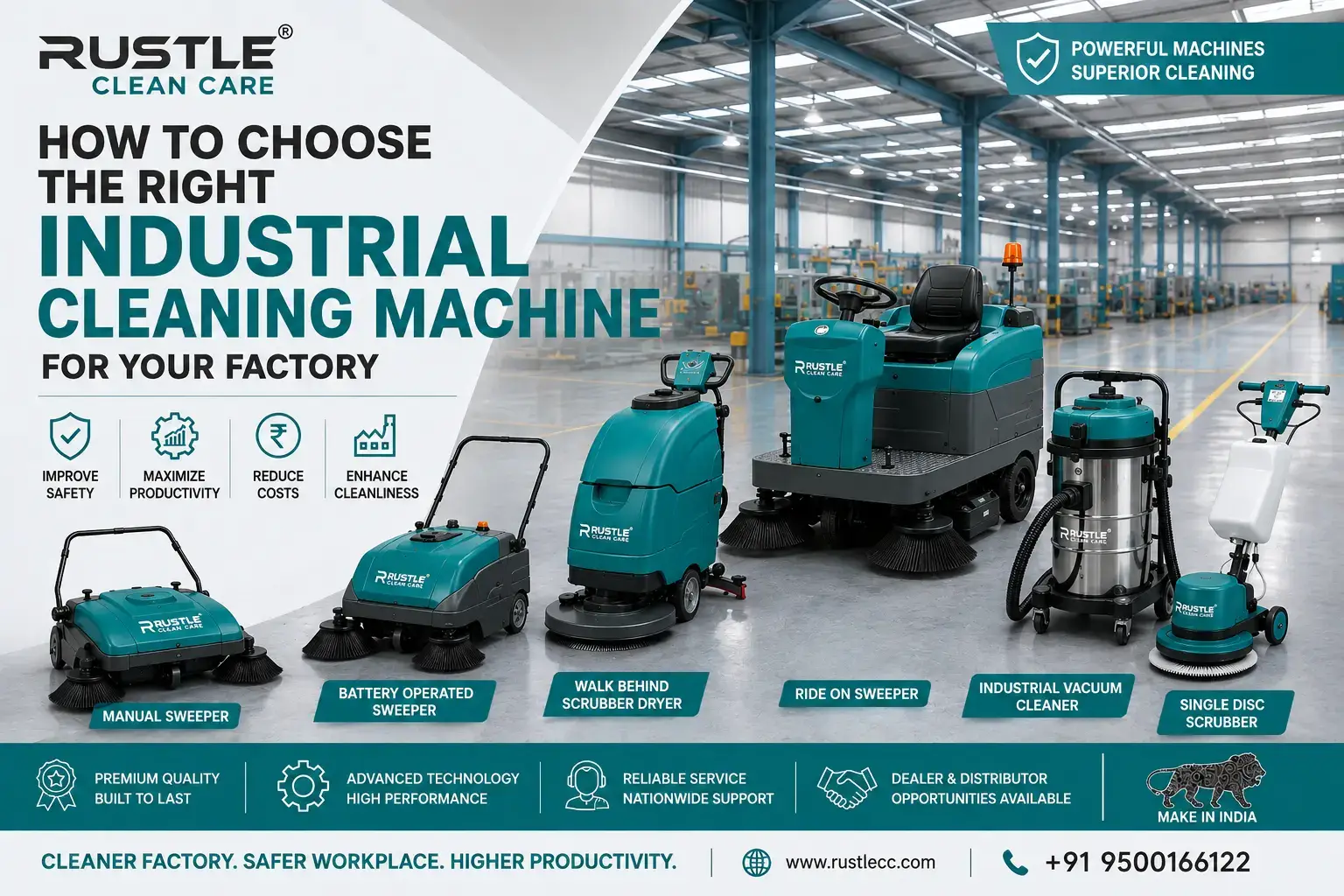
How to Choose the Right Industrial Cleaning Machine for Your Factory
Blog Summary
How to Choose the Right Industrial Cleaning Machine for Your Factory
Choosing the right industrial cleaning machine for your factory comes down to six practical checks, not brand names or price tags. Start by measuring your exact floor area — this alone decides whether you need a manual sweeper, a walk-behind scrubber dryer, or a ride-on sweeper. Next, identify your floor type (concrete, epoxy, tile, or anti-static), since the wrong brush or pad can damage flooring and shorten the machine’s life. Then match the machine to your contamination type — dry dust needs a sweeper, wet spills need a scrubber dryer, fine airborne dust needs a vacuum cleaner.
Power source matters too: battery-operated machines suit indoor food, pharma, or noise-sensitive units, while fuel-powered ride-on units work best for large open yards. Before ordering, always confirm local spare parts availability and compare total cost of ownership, not just the sticker price. Skipping these steps is exactly why machines end up unused while staff quietly go back to manual cleaning.
Buy the wrong industrial cleaning machine, and you’ll find out fast. It struggles on your floor, the battery doesn’t last a shift, or the brush wears down your epoxy coating within weeks. Then it sits in a corner while your team goes back to manual cleaning.
Most factories don’t get this wrong because they picked a bad brand. They get it wrong because they never worked through the basics — floor area, floor type, dust load, and shift pattern — before placing the order.
This guide walks you through exactly how to choose, step by step, so you buy one machine that actually fits your factory instead of three that don’t.
Why Getting This Choice Right Matters
A cleaning machine is not a one-time purchase you set and forget. It runs every shift, on your floor, under your dust and traffic conditions, for years. Get the choice wrong and you pay for it in three ways:
- Downtime — the wrong machine breaks down more often and takes longer to repair
- Wasted capital — an oversized ride-on machine in a small unit, or an undersized manual sweeper on a huge floor, wastes money either way
- Manual labor creeping back in — if the machine can’t keep up, staff quietly go back to brooms and mops, and you’ve paid for equipment that isn’t being used
Getting the choice right the first time avoids all three.
Featured Snippet: How to Choose the Right Industrial Cleaning Machine?
Quick answer: Match the machine to three factors — your floor area in square feet, your floor type (concrete, epoxy, tile), and your contamination type (dry dust, wet spills, or both). A small unit under 5,000 sq ft usually needs a manual sweeper or single disc scrubber. A large factory floor over 20,000 sq ft usually needs a ride-on sweeper or a walk-behind scrubber dryer.
Step 1: Measure Your Actual Factory Floor Area
Don’t estimate this. Walk the floor or check your building plan for the exact square footage you need cleaned per shift. This one number rules out most of the wrong options immediately:
| Floor Area | Typical Machine Fit |
|---|---|
| Under 5,000 sq ft | Manual sweeper or single disc scrubber |
| 5,000–20,000 sq ft | Walk behind scrubber dryer or battery operated sweeper |
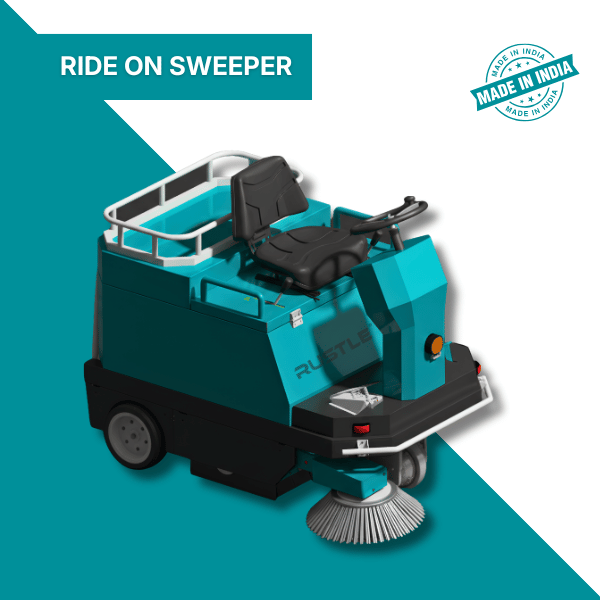
| 20,000–50,000 sq ft | Ride-on sweeper |
| Over 50,000 sq ft | Ride-on sweeper, possibly with a second unit for peak shifts |
A machine sized for a 10,000 sq ft unit will fall badly behind on a 45,000 sq ft floor — and an oversized ride-on sweeper in a small unit just wastes capital and floor space for maneuvering.
Step 2: Identify Your Floor Type
Concrete, epoxy-coated floors, vitrified tile, and anti-static flooring all respond differently to brush pressure, pad hardness, and water volume. The wrong pad can dull an epoxy finish or leave streaks on tile.
- Bare concrete — tolerates aggressive brushes; good for sweepers and heavy-duty scrubbers
- Epoxy-coated floors — need softer pads and controlled water flow to protect the coating
- Vitrified tile — needs a scrubber dryer that dries completely to avoid slip hazards
- Anti-static flooring (common in electronics/pharma units) — needs machines and pads rated for anti-static surfaces
Ask your machine supplier which brush or pad type suits your exact floor before finalizing the order.
Step 3: Identify Your Contamination Type
Different factories generate different mess, and the machine needs to match it:
- Dry dust and debris (metal shavings, packaging waste, general foot-traffic dirt) → sweeper
- Wet spills, oil, or coolant → scrubber dryer
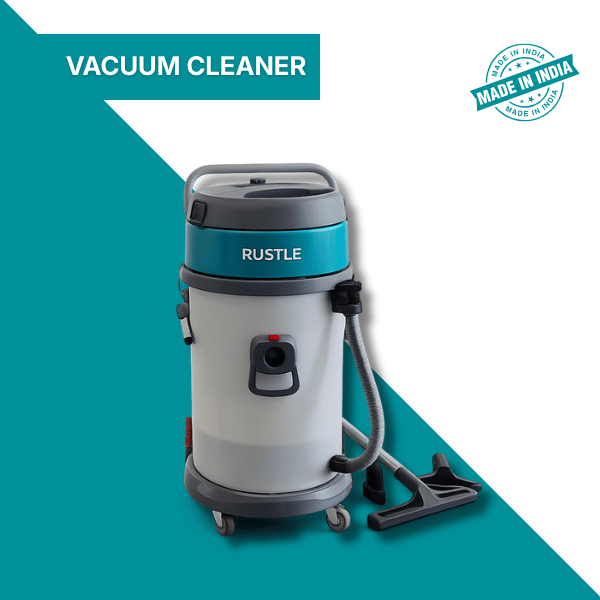
- Fine airborne dust (textile fluff, powder, fine grinding dust) → industrial vacuum cleaner
- Both wet and dry at different times of day → many factories run a sweeper for dry debris and a scrubber dryer for wet cleaning, rather than trying to force one machine to do both jobs well
Step 4: Choose Your Power Source
| Power Source | Best For | Watch Out For |
|---|---|---|
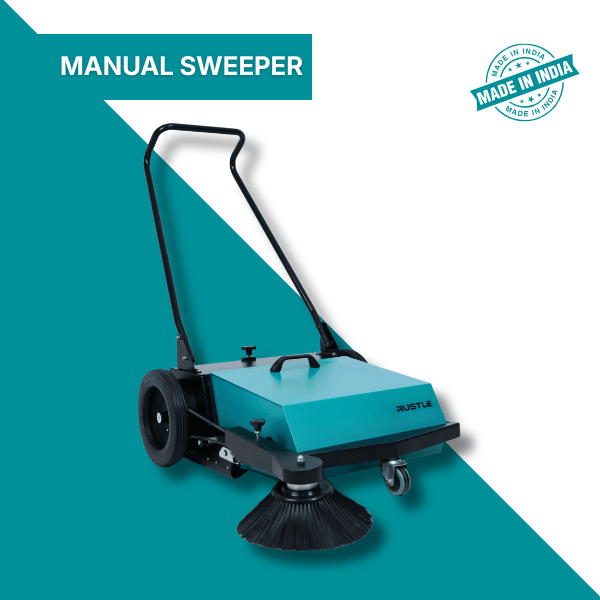
| Manual | Small areas, tight aisles, low budget | Slower coverage, more physical effort |
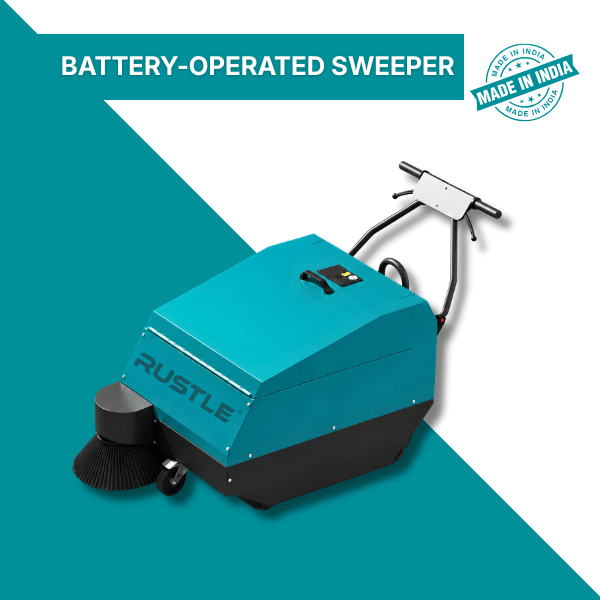
| Battery operated | Indoor factories, food/pharma units, noise-sensitive areas | Needs charging discipline between shifts |
| Fuel powered (ride-on) | Large open yards, logistics zones, outdoor-adjacent areas | Not ideal for enclosed, poorly ventilated spaces |
If your factory runs food-grade, pharma, or electronics production, battery-operated or manual machines are usually the safer choice — no fumes, lower noise, easier compliance.
Step 5: Check Local Spare Parts and Service Response
This step gets skipped constantly, and it’s the one that causes the most regret later. Before you buy, ask directly: “If a brush motor or battery fails, how many days until I get a replacement part?”
A manufacturer with local stock usually answers in days. An importer or a pure reseller often can’t answer that question with confidence at all — and that’s the moment your new machine turns into an expensive object gathering dust in the corner.
Step 6: Compare Total Cost of Ownership, Not Just the Price Tag
The cheapest quote on paper is rarely the cheapest machine over three years. Ask for:
- Expected brush/pad/filter replacement frequency and cost
- Battery life and replacement cost (for battery-operated machines)
- Warranty length and what it actually covers
- Whether operator training is included or charged separately
A slightly higher upfront price with faster parts availability and included training almost always costs less over the machine’s working life.
Machine-Type Comparison for Factory Use
| Machine | Best For | Not Ideal For |
|---|---|---|
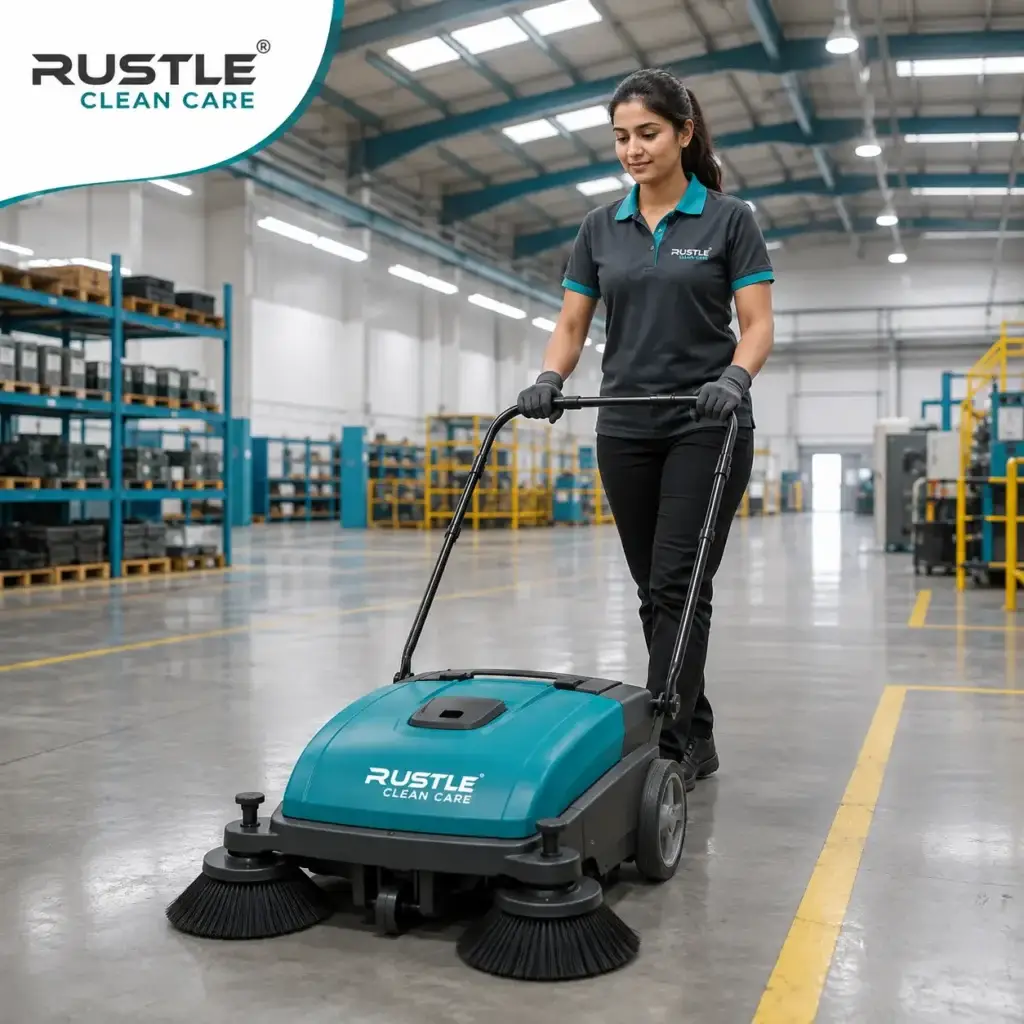
| Manual Sweeper | Small areas, corridors, tight budgets | Large open floors, heavy daily traffic |
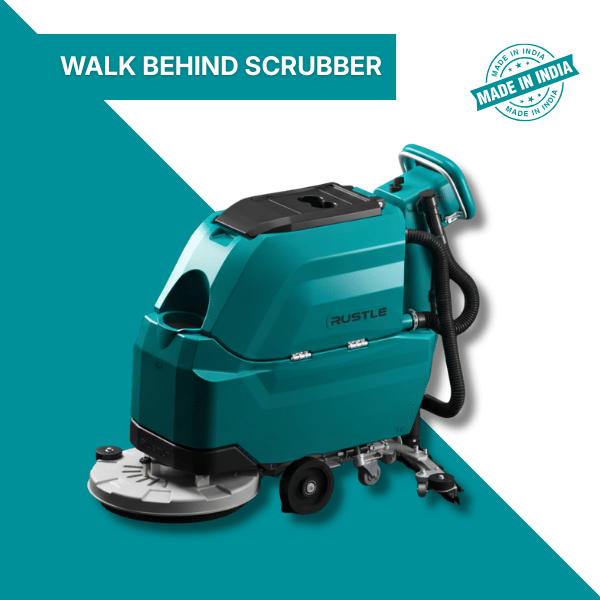
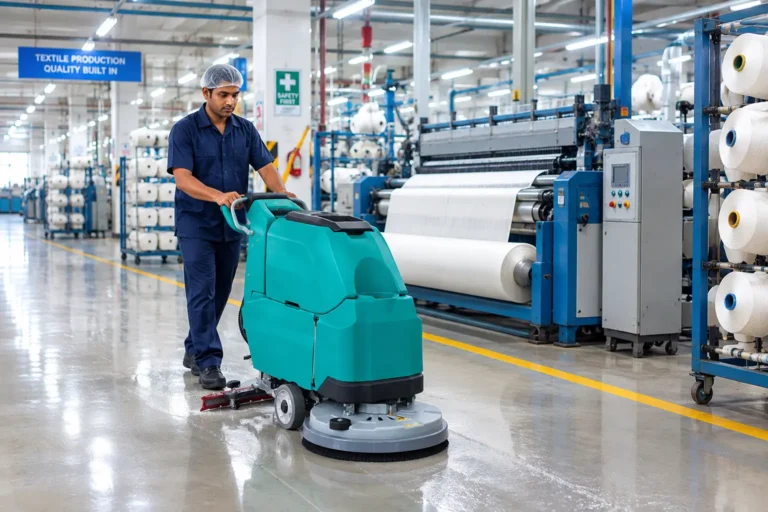
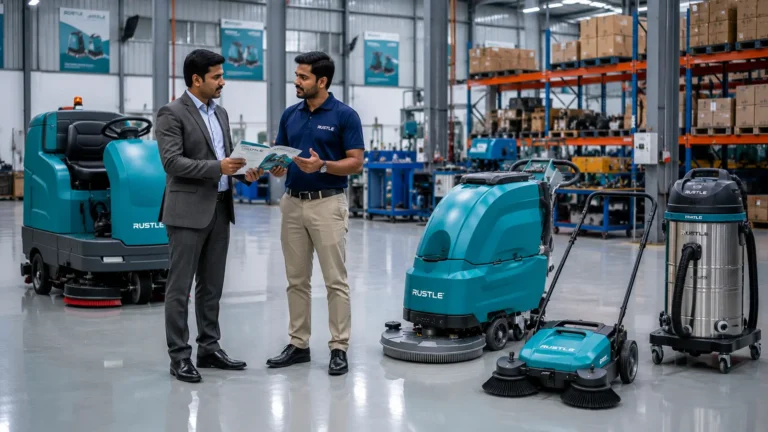
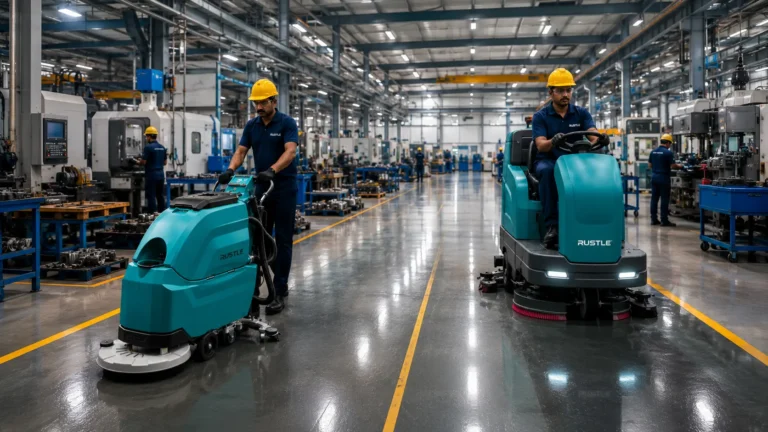
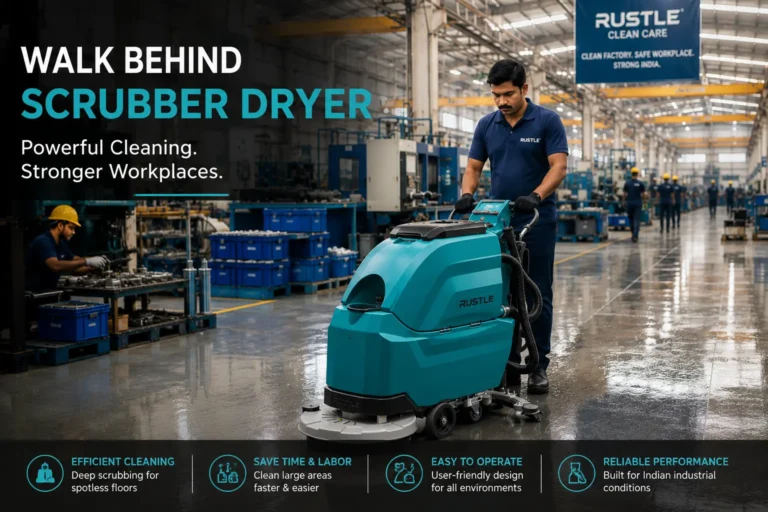
| Walk Behind Scrubber Dryer | Wet floors, hospital-grade hygiene needs, mid-size factories | Very large open warehouse-style floors |
| Ride-On Sweeper | Large warehouses, logistics floors, big factory shop floors | Small units, tight aisles |
| Battery Operated Sweeper | Indoor, noise/fume-sensitive environments | Very large outdoor-adjacent yards |
| Industrial Vacuum Cleaner | Fine dust, textile fluff, grinding dust | Wet spill cleanup |
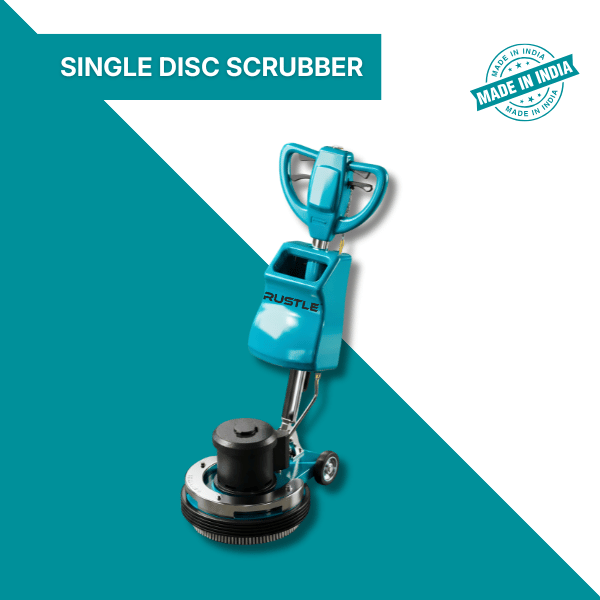
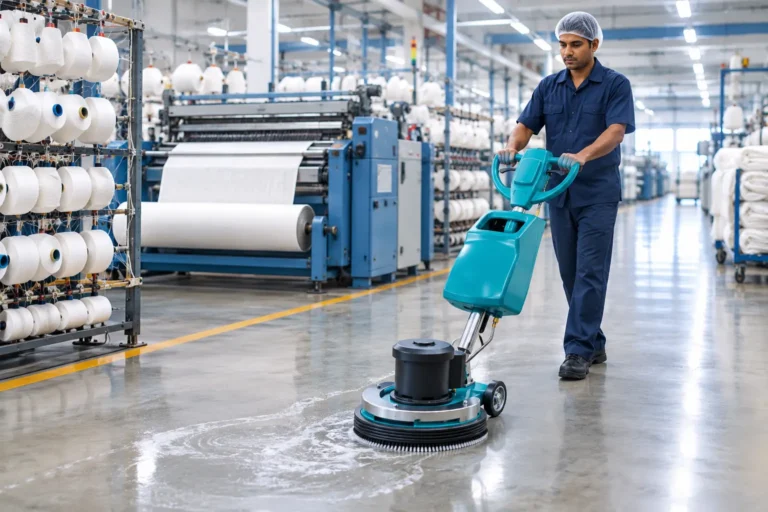
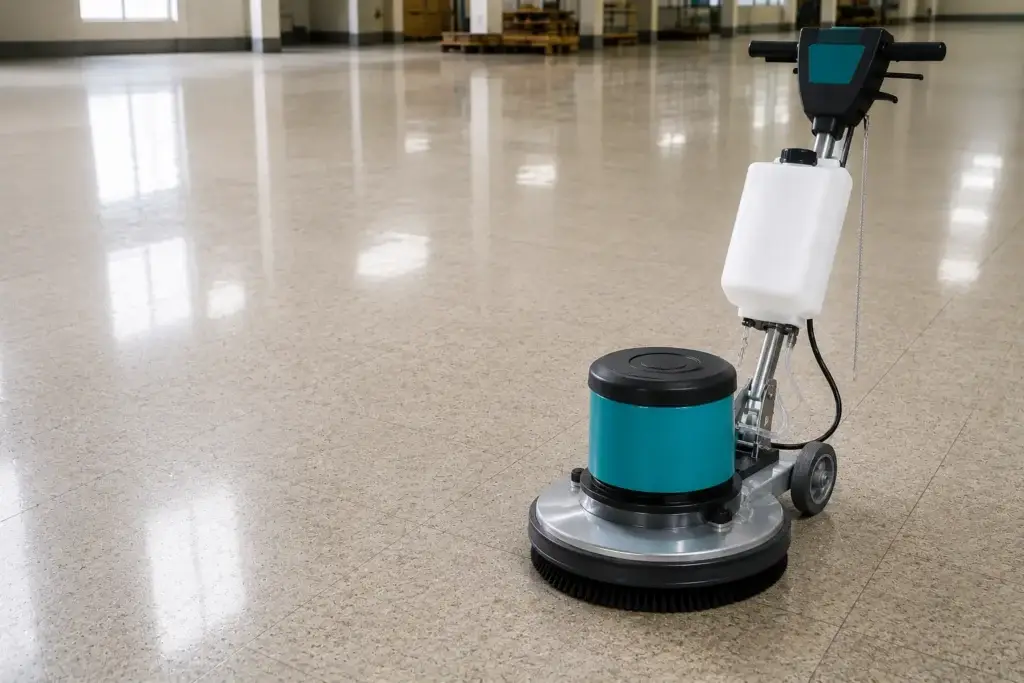
| Single Disc Scrubber | Polishing, mid-size hard floors, showroom-style finish | Heavy debris or large open areas |
Common Mistakes Factories Make When Choosing
- Buying on price alone — the lowest quote usually has the weakest spare parts and service backup
- Ignoring floor type — the wrong pad or brush damages flooring and shortens the machine’s life
- Skipping operator training — most early breakdowns come from incorrect use, not a manufacturing fault
- Trying to make one machine do everything — sweeping, scrubbing, and vacuuming solve different problems
- Not asking about spare parts before ordering — the single biggest cause of unplanned downtime later
Expert Tips for Getting the Choice Right
- Walk your floor at floor level, not just from an office plan, to spot tight corners or uneven surfaces
- Ask for a demo on your actual floor before committing, not just a showroom demo
- Involve the operators who will actually run the machine daily in the decision
- Confirm charging or refueling logistics fit your shift pattern before buying a battery or fuel-powered unit
- Always request a written spare parts and service response commitment, not just a verbal promise
Pre-Purchase Checklist
- Measured exact floor area in square feet
- Identified floor type (concrete, epoxy, tile, anti-static)
- Identified contamination type (dry, wet, or both)
- Decided on power source based on indoor/outdoor and compliance needs
- Asked for local spare parts stock and service response time
- Requested total cost of ownership, not just the unit price
- Confirmed operator training is included
- Arranged an on-site demo on your actual factory floor
Case Example: Getting the Match Right
A mid-size manufacturing unit with a 30,000 sq ft shop floor was initially considering a manual sweeper to save on upfront cost. After measuring actual floor coverage needed per shift, they switched to a ride-on sweeper instead. Cleaning time dropped from roughly three hours with two staff members to under 45 minutes with one operator — freeing up two people per shift for other production support tasks. The manual sweeper would have cost less on day one, but would have needed far more labor hours every single day to cover the same floor.
Quick Answers (FAQs)
1. What is the first thing I should check before choosing an industrial cleaning machine? Your exact floor area in square feet. It’s the single biggest factor in deciding between a manual sweeper, walk-behind scrubber, or ride-on sweeper.
2. Which cleaning machine is best for a large factory floor? For floors over 20,000 sq ft, a ride-on sweeper is usually the most efficient option, since it covers large areas quickly with a single operator.
3. Can I use the same machine for sweeping and scrubbing? Some scrubber dryers wash and dry in one pass, but sweeping and scrubbing solve different problems. Most factories use a sweeper for dry debris and a scrubber dryer for wet cleaning separately.
4. Is a battery-operated sweeper powerful enough for a factory? Yes, for most indoor factory environments. Battery-operated sweepers are quieter, emission-free, and modern battery capacity typically covers a full shift.
5. How do I know if my floor type needs a specific brush or pad? Epoxy-coated and anti-static floors need softer pads and controlled water flow. Ask your supplier for a floor-specific recommendation before ordering, since the wrong pad can damage the coating.
6. What happens if I choose a machine that’s too small for my floor? It falls behind on coverage, forcing staff back to manual cleaning for the areas it can’t reach in time — which defeats the purpose of buying the machine.
7. Should I prioritize price or after-sales service when choosing a machine? After-sales service matters more over time. A cheaper machine with slow spare parts availability usually costs more in downtime than a slightly pricier machine with fast local support.
8. Do I need operator training for a new cleaning machine? Yes. Most early breakdowns come from incorrect operation, not manufacturing defects. Training reduces damage and extends the machine’s working life.
9. How often should factory cleaning machines be serviced? A technical inspection every three months is a reasonable baseline, in addition to daily cleaning of brushes, pads, and filters after each shift.
10. Can I get a demo before buying an industrial cleaning machine? Most manufacturers will arrange an on-site demo on your actual factory floor — this is worth requesting, since a showroom demo doesn’t reflect your real floor conditions.
Conclusion
Choosing the right industrial cleaning machine for your factory isn’t about picking the most advanced model or the cheapest quote. It’s about working through the basics in order — floor area, floor type, contamination type, power source, and spare parts availability — before you sign off on anything.
Do that, and you end up with one machine that fits your factory instead of an expensive guess sitting unused in the corner.
Call to Action
Not sure which machine fits your factory floor? Talk to our technical team at Rustle Clean Care — we’ll help you match the right sweeper, scrubber, or vacuum to your exact floor size and shift pattern, and can arrange an on-site demo.