
Industrial Cleaning Equipment for Factories: How to Reduce Cleaning Costs
Industrial Cleaning Equipment for Factories: How to Reduce Cleaning Costs
Blog Summary
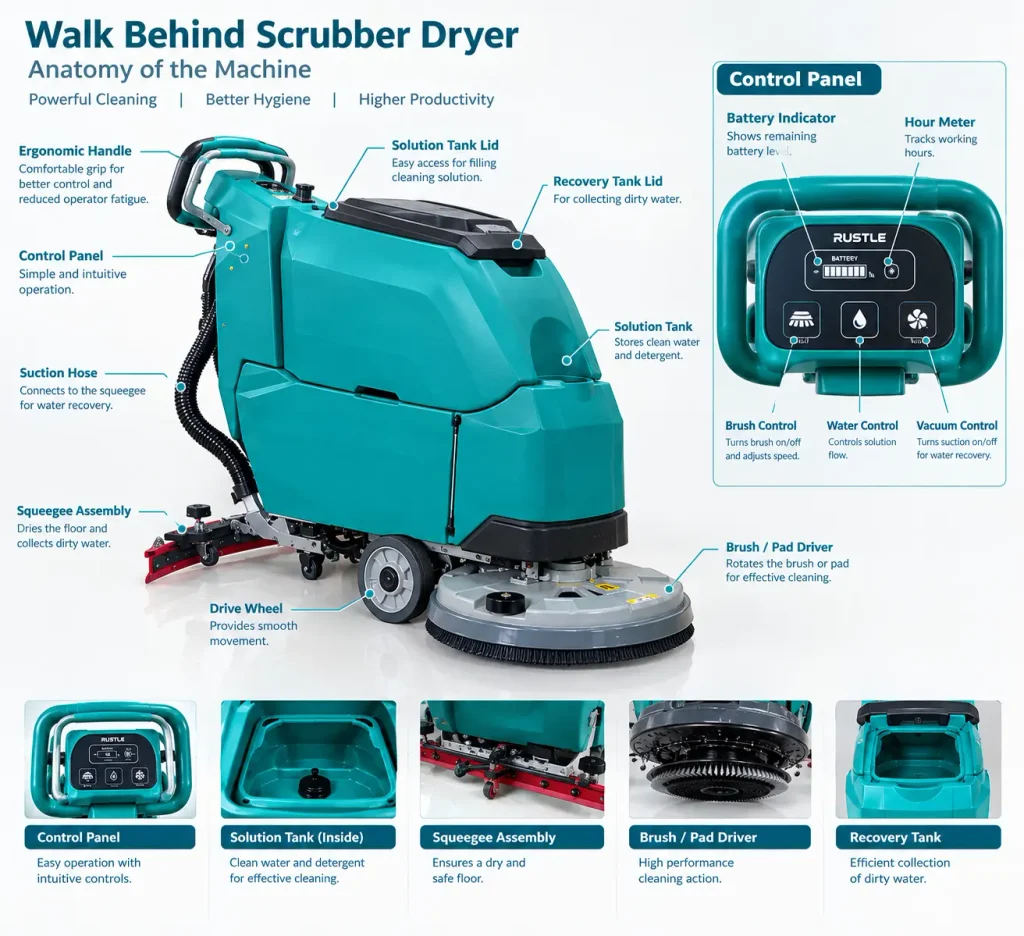
Industrial Cleaning Equipment for Factories helps manufacturing facilities maintain cleaner, safer and more productive working environments. This guide explains the important components of modern cleaning machines, including the control panel, solution tank, recovery tank, suction hose, brush or pad driver, drive wheel and squeegee assembly. Understanding these components helps factory operators select the right equipment and use it effectively for different floor-cleaning requirements. The article also explains how professional cleaning machines support routine maintenance in manufacturing plants, warehouses and other industrial facilities. Learn how Industrial Cleaning Equipment for Factories can improve cleaning efficiency and make floor maintenance more systematic.
Factory cleaning is often treated as a routine housekeeping expense. But when you add operator hours, cleaning time, water, chemicals, machine downtime and consumables, the actual cost can be much higher than expected.
For a small workshop, manual sweeping and mopping may be practical. But for a manufacturing plant, textile factory, warehouse or engineering unit covering thousands of square feet, the same approach can consume considerable time and manpower.
That is where the right industrial cleaning equipment for factories becomes useful.
The goal is not simply to buy a machine. The goal is to find equipment that solves the actual cleaning problem while making the daily cleaning process more productive and predictable.
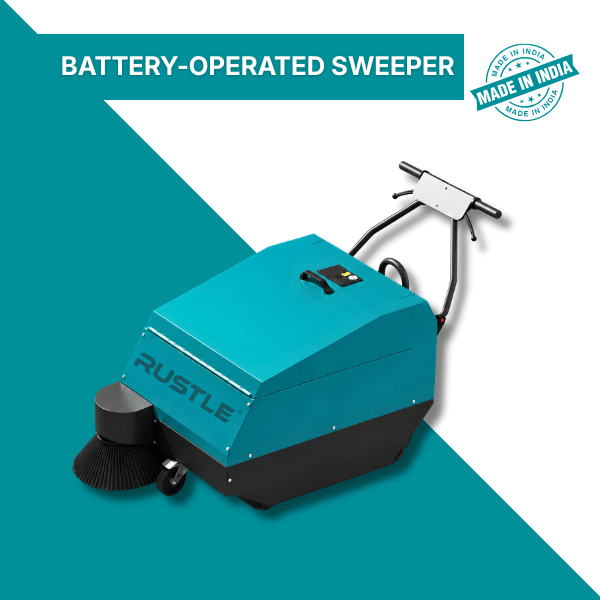
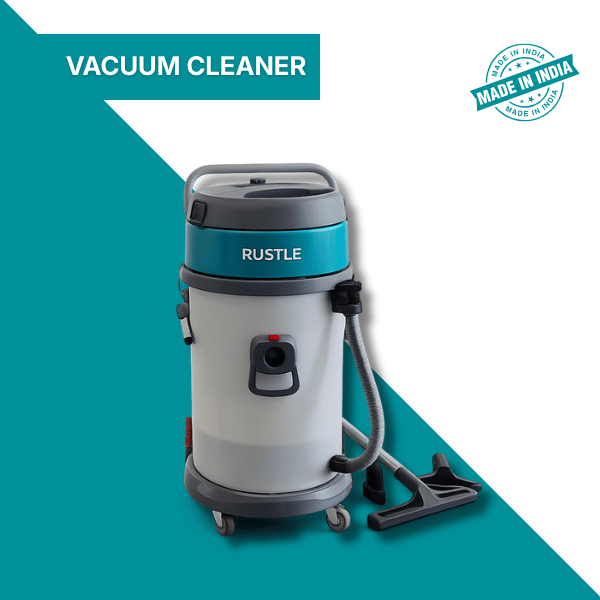
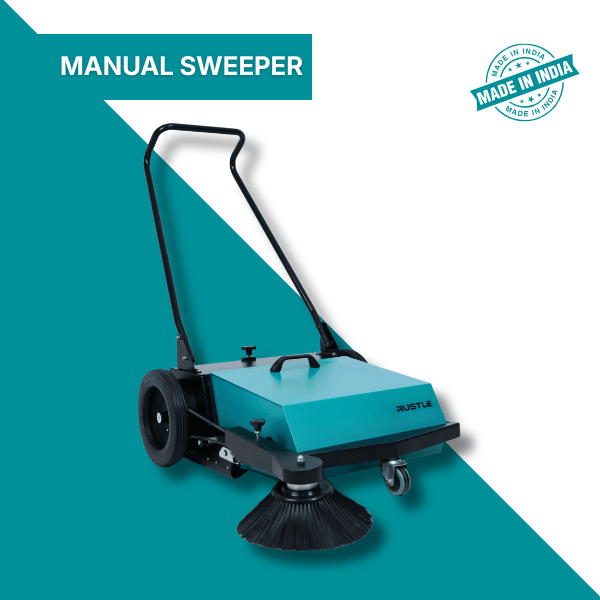
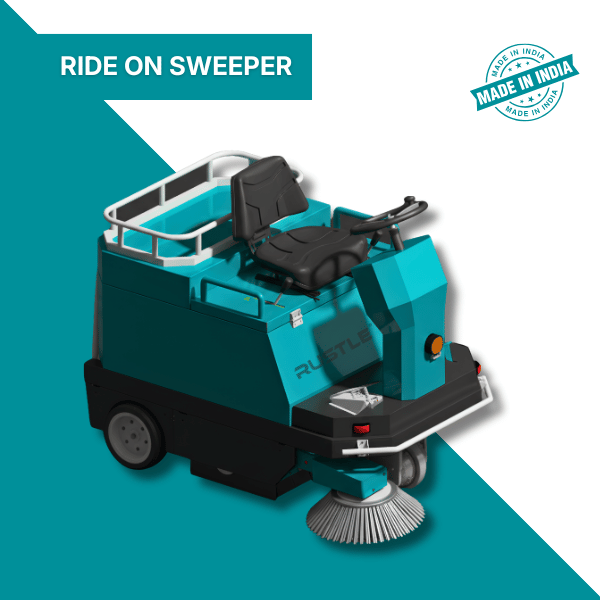
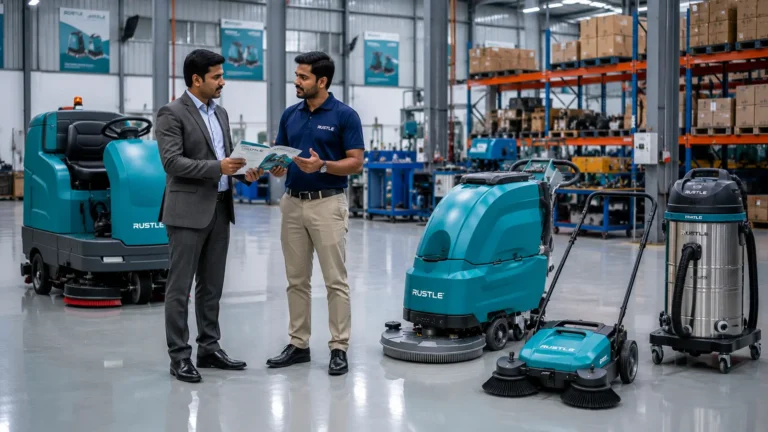
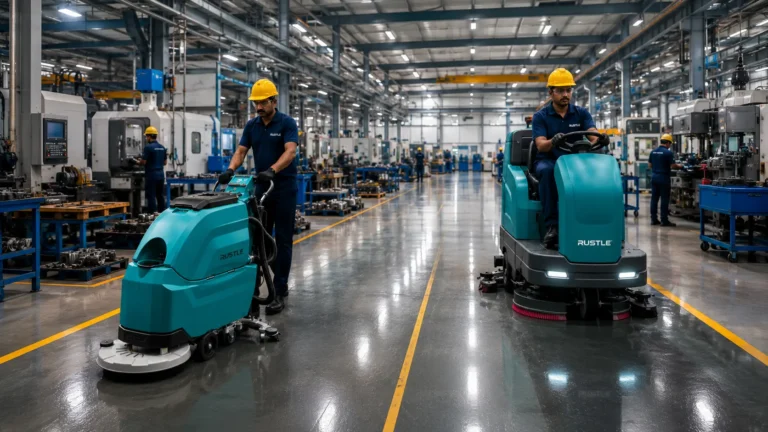
Rustle Clean Care’s current range includes manual sweepers, battery-operated sweepers, ride-on sweepers, walk-behind scrubber driers, single-disc scrubbers and industrial vacuum cleaners for industrial and commercial applications in India.
How Can I Reduce Cleaning Costs in My Factory?
The simplest way is to look beyond the purchase price.
Your real cleaning expense can include:
- Cleaning labour
- Hours spent cleaning
- Water consumption
- Cleaning chemicals
- Brushes and pads
- Machine maintenance
- Replacement parts
- Production interruptions
- Repeated manual cleaning
A suitable machine can help address several of these areas at the same time.
1. Reduce the Time Spent on Routine Cleaning
Large floors take time to sweep and mop manually.
A mechanical sweeper can collect loose dust and debris more systematically, while a scrubber dryer can combine floor scrubbing with dirty-water recovery.
Professional cleaning manufacturers commonly position sweepers, scrubbers and vacuum cleaners as application-specific solutions rather than one machine for every task.
For example:
Factory floor with dry dust → Sweeper
Hard floor requiring washing → Scrubber dryer
Production dust or debris → Industrial vacuum cleaner
This simple distinction can prevent businesses from buying equipment that does not match the job.
Which Cleaning Machine Is Best for a Factory?
There is no single machine that suits every factory.
The right choice depends on floor area, floor surface, dirt type, cleaning frequency and available operating space.
| Factory cleaning requirement | Suitable equipment |
|---|---|
| Dust and loose debris | Manual or battery-operated sweeper |
| Large open floor areas | Ride-on sweeper |
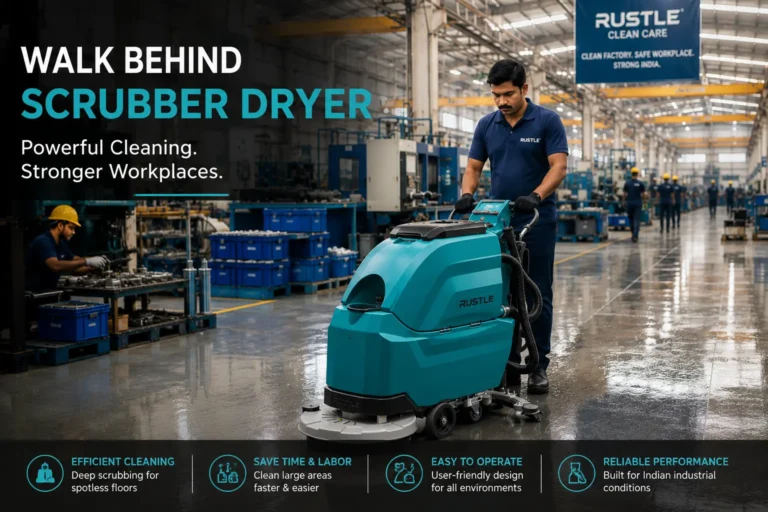
| Medium hard-floor cleaning | Walk-behind scrubber dryer |
| Intensive floor scrubbing | Single-disc scrubber |
| Production dust and debris | Industrial vacuum cleaner |
| Large wet-cleaning requirement | Suitable scrubber dryer |
This application-based approach is also reflected in major professional cleaning equipment ranges. Kärcher separates compact, walk-behind and ride-on scrubber dryers according to cleaning-area requirements, while IPC categorizes scrubbers by machine type, power supply, cleaning path and suitable area.
Where Do Factories Usually Spend Too Much on Cleaning?
Manual Labour
One of the biggest recurring expenses can be the amount of time employees spend on repetitive floor cleaning.
Mechanization does not necessarily mean reducing headcount. It can instead allow cleaning teams to cover planned areas more efficiently and spend more time on tasks that machines cannot perform.
Unplanned Downtime
A dirty production area may require repeated cleaning during operating hours.
For some manufacturing environments, cleaning also has to be coordinated around production activities. Professional industrial cleaning systems are designed around this requirement, including solutions for removing production residues without unnecessarily interrupting processes.
Incorrect Machine Selection
Buying a machine simply because it has a lower price can create another problem.
For example, using a small manual sweeper for an extremely large warehouse may increase cleaning time. On the other hand, using an oversized machine in narrow production aisles may make daily operation inconvenient.
The machine needs to fit the workplace.
What Industrial Cleaning Equipment Do Factories Need?
1. Manual Sweeper
A manual sweeper can be useful for smaller areas and routine dry debris.
It may suit:
- Workshops
- Small warehouses
- Pathways
- Stores
- Smaller production areas
It is also useful when a business wants a simple cleaning solution without depending on a powered machine.
2. Battery Operated Sweeper
A battery-operated sweeper can be considered when regular sweeping is required across larger indoor areas.
It can be particularly useful in warehouses and manufacturing facilities where loose dust, fibres and debris need to be collected regularly.
3. Ride-On Sweeper
For large open areas, a ride-on sweeper can help an operator cover more floor without walking behind the machine throughout the cleaning cycle.
This type of application is common in large warehouses, production halls and other spacious facilities. Kärcher and IPC similarly categorize ride-on equipment for larger surfaces.
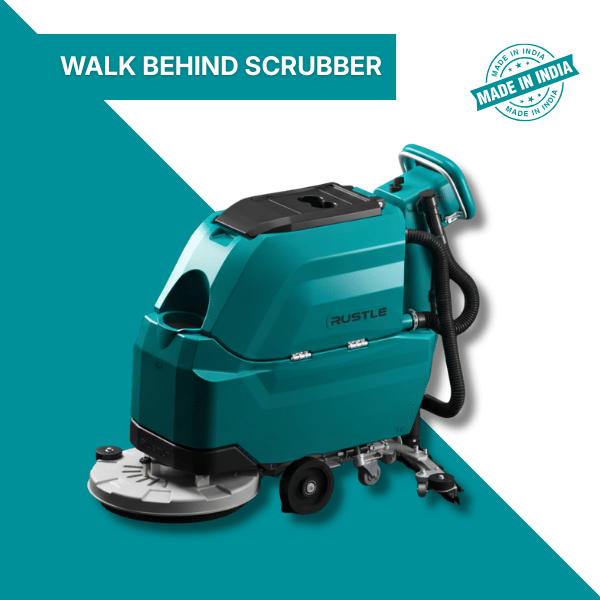
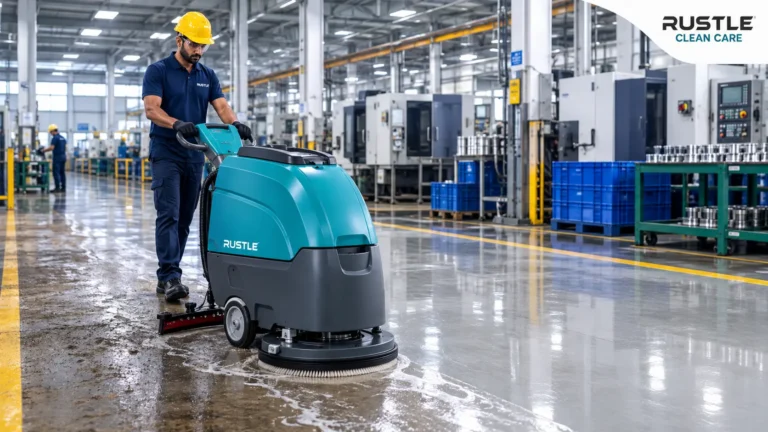
4. Walk-Behind Scrubber Dryer
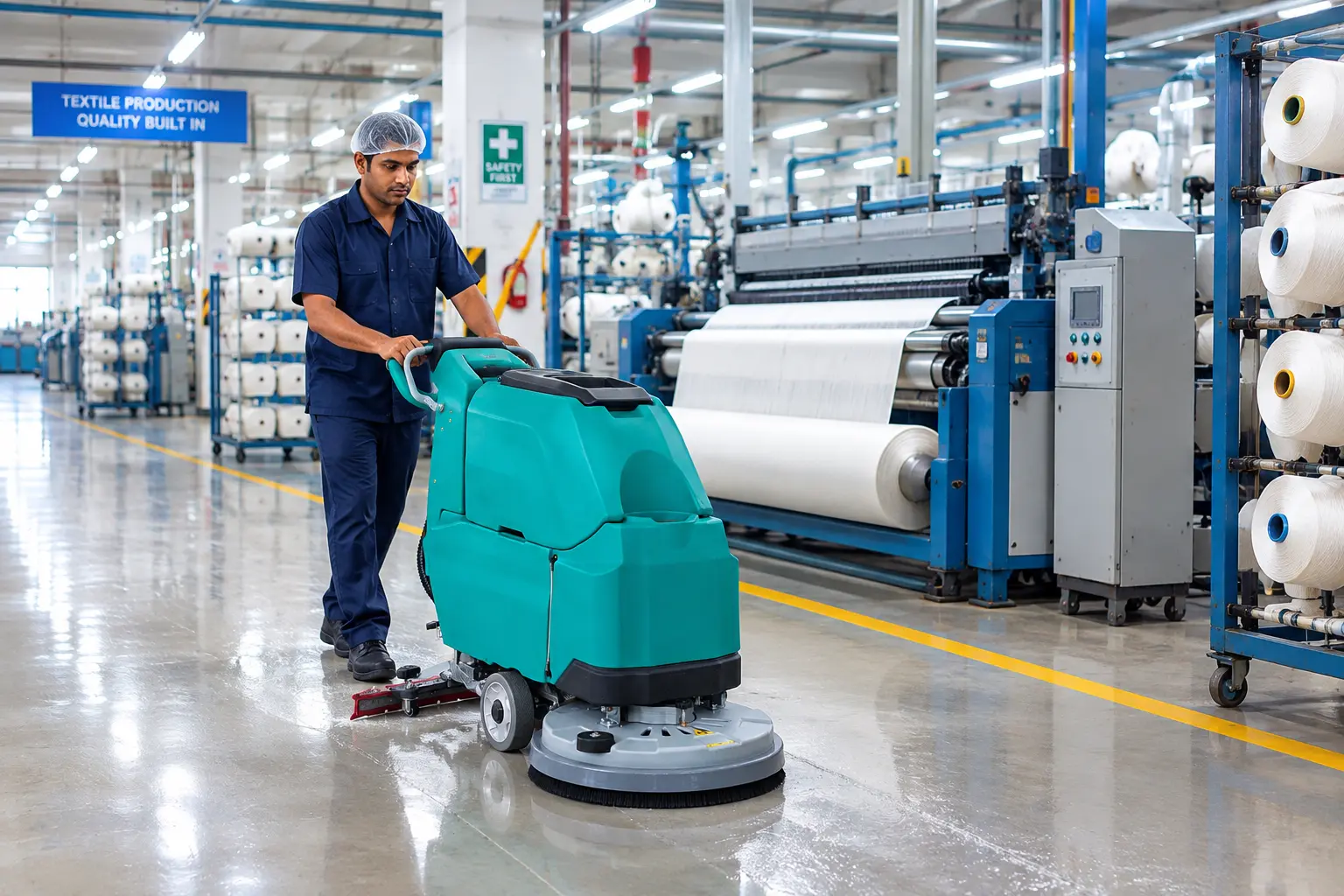
If your factory floor has stubborn dirt, stains or regular wet-cleaning requirements, a walk-behind scrubber dryer may be more appropriate than a sweeper.
The machine scrubs the surface and recovers dirty water, helping leave the floor cleaner and more accessible after cleaning.
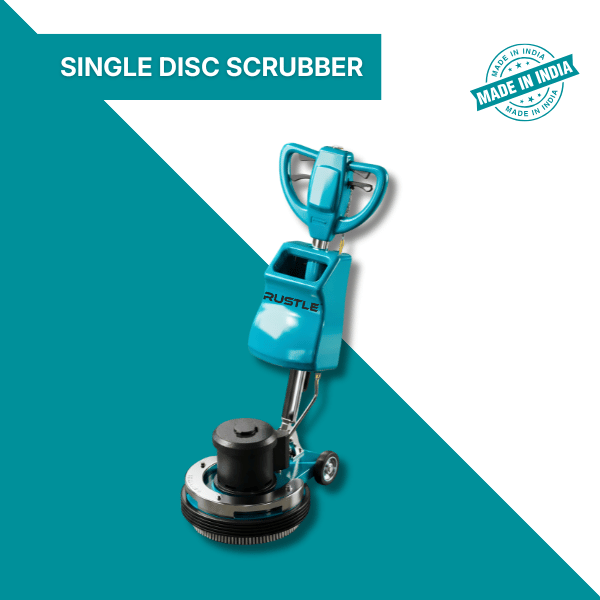
5. Single Disc Scrubber
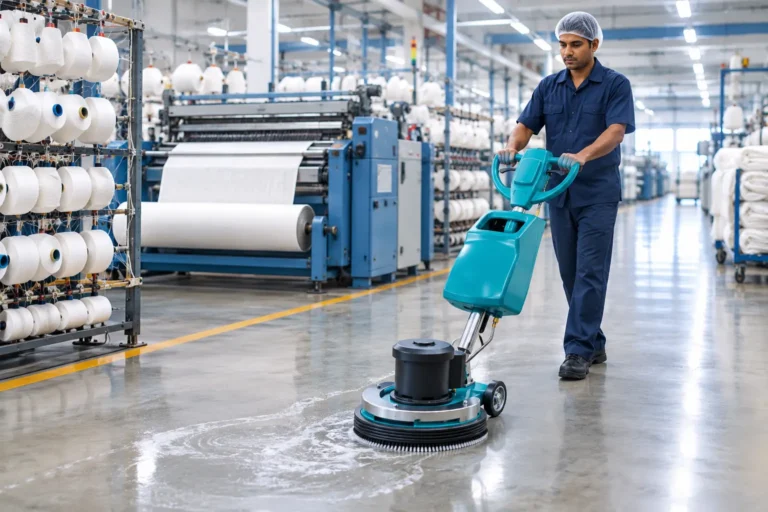
A single-disc scrubber is useful when the cleaning requirement involves more intensive floor scrubbing or floor maintenance.
It can be considered for areas where routine sweeping alone is not enough.
6. Industrial Vacuum Cleaner
Factories can generate dust, production residues and other debris that are better handled with an industrial vacuum cleaner.
This is particularly relevant to manufacturing environments where controlling production-related dust is part of routine housekeeping.
How Do I Choose Industrial Cleaning Equipment for My Factory?
Before requesting a quotation from an industrial cleaning equipment manufacturer, answer these questions.
Step 1: How Large Is the Floor?
Measure the approximate cleaning area.
Do not estimate only by the total factory building size. Identify the actual floor area requiring machine cleaning.
Step 2: What Type of Dirt Are You Removing?
Ask:
- Is it dry dust?
- Textile fibre?
- Metal particles?
- Oil?
- Grease?
- Mud?
- Packaging waste?
- General debris?
The answer will narrow down your machine options.
Step 3: What Is the Floor Surface?
Check whether you have:
- Concrete
- Epoxy
- Tiles
- Industrial flooring
- Other hard surfaces
Brush and pad selection should be appropriate for the surface.
Step 4: How Often Will the Machine Operate?
Daily operation and occasional cleaning can require different specifications.
Also consider the number of shifts and the expected operating hours.
Step 5: What Support Is Available?
Before buying, ask the manufacturer or industrial cleaning equipment distributor about:
- Spare parts
- Brushes and pads
- Operator training
- Installation
- Maintenance
- Technical assistance
- Warranty
- Delivery
- Local support
Rustle Clean Care currently lists distributor support, machine installation, operator training, scheduled maintenance, genuine spare-parts supply and technical assistance among its support offerings.
Can Industrial Cleaning Machines Actually Save Money?
They can, but the saving depends on how the equipment is selected and used.
Consider a simple example.
A factory currently uses several workers for repeated sweeping and mopping. If the same cleaning programme can be completed with fewer operator hours using appropriate mechanized equipment, the business may reduce the labour time associated with routine floor cleaning.
There can also be savings from:
- More consistent cleaning schedules
- Reduced manual effort
- Better floor-cleaning productivity
- More controlled water usage
- Reduced unnecessary repeat cleaning
- Easier routine maintenance planning
However, don’t calculate savings from the machine’s purchase price alone.
A proper evaluation should compare the expected operating cost over the machine’s useful working period.
Common Mistakes When Buying Factory Cleaning Equipment
Choosing Only the Cheapest Machine
Initial price does not tell you the complete cost of ownership.
Buying Without Measuring the Floor
Floor area affects machine selection and productivity.
Ignoring the Dirt Type
A machine designed for dry debris should not automatically be considered a replacement for a scrubber dryer.
Forgetting Consumables
Brushes, pads, squeegees and other wear components need to be considered.
Not Checking Spare Parts
A machine that cannot be maintained quickly can become a costly idle asset.
Buying Without Operator Training
Even good equipment needs correct operation and routine care.
IPC’s troubleshooting guidance, for example, identifies worn or unsuitable brushes and pads as possible causes of uneven cleaning or floor scratching.
Expert Tips to Lower Factory Cleaning Costs
Before buying, create a simple cleaning equipment checklist:
- Measure the actual floor area.
- Identify the main type of contamination.
- Check the floor material.
- Record current cleaning labour hours.
- Record current water and chemical usage.
- Identify difficult areas and narrow aisles.
- Estimate daily machine operating hours.
- Ask about consumable costs.
- Check spare-parts availability.
- Compare manufacturer and distributor support.
- Request a product demonstration where practical.
- Compare the expected total operating cost rather than only the purchase price.
This approach makes the purchasing decision more evidence-based.
Industrial Cleaning Equipment for Different Indian Industries
The requirements can vary considerably between sectors.
Textile Industry
Textile factories may need equipment for floor dust, fibres and general production-area housekeeping. Sweeping and vacuuming can address dry debris, while scrubber dryers can be used for hard-floor cleaning.
Automotive and Engineering
Metal particles, workshop dust, oil and production residues can require a combination of sweeping, vacuuming and wet floor cleaning.
Food Processing
Cleaning procedures need to consider the facility’s hygiene requirements, floor surfaces, water management and cleaning chemicals.
Pharmaceutical Manufacturing
Procurement teams should consider the specific cleaning protocol of the facility, contamination risks, floor type and equipment suitability.
Warehousing and Logistics
Large floor areas and continuous movement can make sweeping productivity an important consideration.
Professional equipment manufacturers similarly organize industrial cleaning solutions around specific sectors and cleaning challenges rather than treating every facility identically.
Key Takeaways
- The cheapest machine is not necessarily the lowest-cost solution.
- Match equipment to the type of dirt and floor surface.
- Use sweepers for suitable dry debris.
- Use scrubber dryers for suitable wet floor-cleaning applications.
- Use industrial vacuum cleaners for appropriate production dust and debris.
- Consider machine productivity and operator time.
- Check spare parts and consumables before purchasing.
- Compare total operating cost, not just purchase price.
- Local distributor and technical support can matter after installation.
- A combination of machines may be more practical for larger factories.
Frequently Asked Questions
How can I reduce cleaning costs in my factory?
Start by measuring current cleaning labour, time, water, chemicals and maintenance costs. Then select equipment that directly addresses the main cleaning requirement.
Which cleaning machine is best for a factory?
It depends on the floor size, floor surface and contamination. A sweeper, scrubber dryer, single-disc scrubber or industrial vacuum cleaner may be suitable for different tasks.
What is the best machine for cleaning industrial floors?
There is no universal answer. Walk-behind scrubber dryers, sweepers and single-disc machines serve different floor-cleaning requirements.
Are industrial cleaning machines worth the cost?
They can be useful when the machine matches the application and is used regularly enough to justify its operating and ownership costs.
How do I choose a floor cleaning machine for my factory?
Check floor area, surface, dirt type, cleaning frequency, aisle width, power availability, consumables, maintenance and spare-parts support.
Which machine is suitable for textile factories?
The appropriate equipment depends on the specific cleaning requirement. Sweepers or industrial vacuum cleaners can address suitable dry debris, while scrubber dryers can be considered for hard-floor washing.
What should I check before buying industrial cleaning equipment?
Check machine suitability, productivity, consumables, spare parts, maintenance, operator training, warranty, technical assistance and distributor support.
Where can I buy industrial cleaning equipment in India?
You can approach an established industrial cleaning machine manufacturer or authorized distributor and provide your floor area, surface type and cleaning requirements for product selection.
Conclusion
Reducing factory cleaning costs is not simply about replacing a broom with a machine.
It starts with understanding where your cleaning budget is being spent and then selecting equipment that addresses the biggest source of wasted time, labour or repeated work.
For a manufacturing plant, that could mean a battery-operated sweeper for routine debris, a ride-on sweeper for a large warehouse, a walk-behind scrubber dryer for hard-floor washing, a single-disc scrubber for intensive floor maintenance, or an industrial vacuum cleaner for production dust.
For businesses searching for industrial cleaning equipment for factories in India, the right manufacturer or distributor should be able to understand the application rather than simply recommend a machine from a catalogue.
Rustle Clean Care currently offers sweepers, scrubber dryers, single-disc scrubbers and industrial vacuum cleaners for industrial and commercial applications, with its product range positioned for factories, warehouses, hospitals and other professional facilities across India.
If you are evaluating cleaning equipment for a factory in Tamil Nadu, Coimbatore, Chennai, Hosur, Bengaluru, Hyderabad, Pune, Gujarat or Maharashtra, prepare your floor area, contamination type and cleaning requirements before requesting a quotation.
The better question is not “Which machine is cheapest?”
It is:
“Which machine can complete our cleaning requirement efficiently at the lowest practical total operating cost?”
That is the starting point for a more cost-conscious factory cleaning strategy.