
Floor Scrubber vs Sweeper: Which Cleaning Machine Is Right for Your Facility?
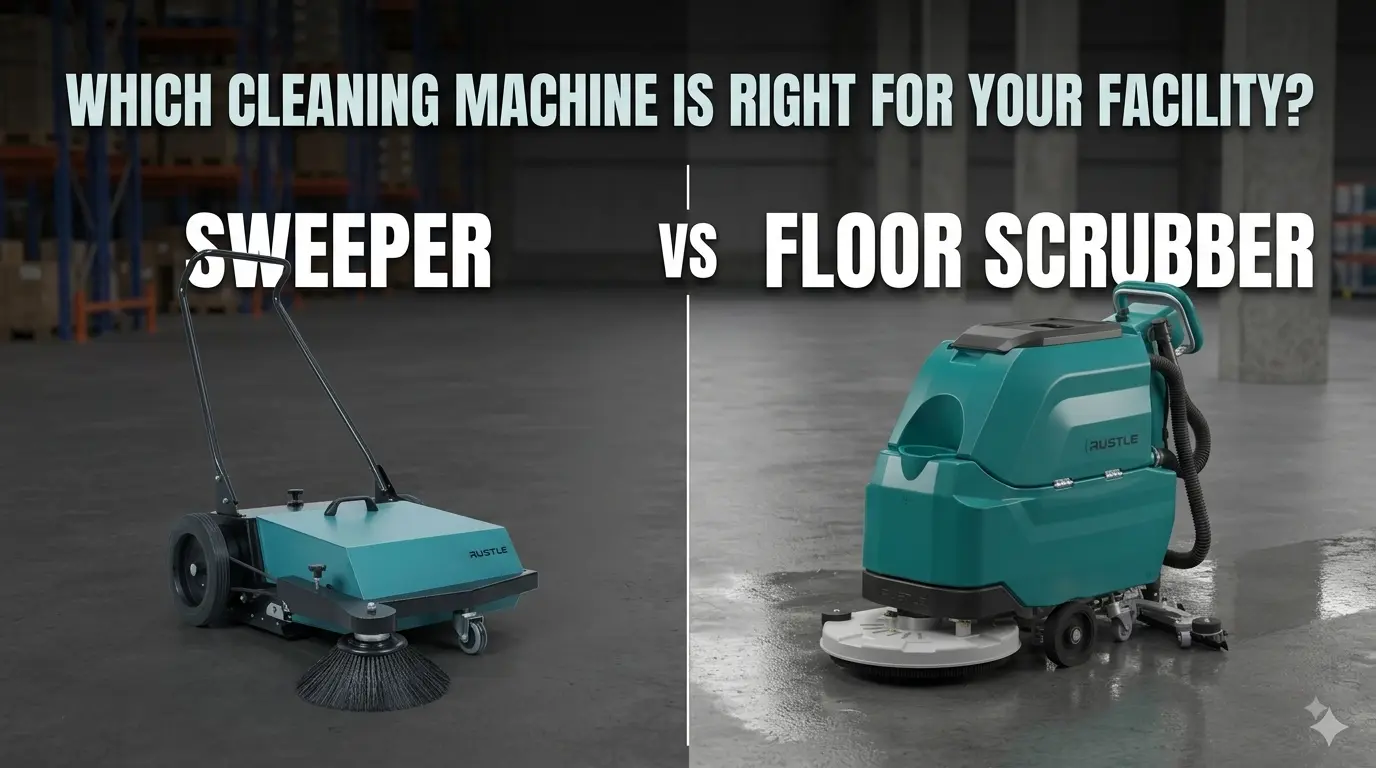
Floor Scrubber vs Sweeper: Which Cleaning Machine Is Right for Your Facility?
Blog Summary
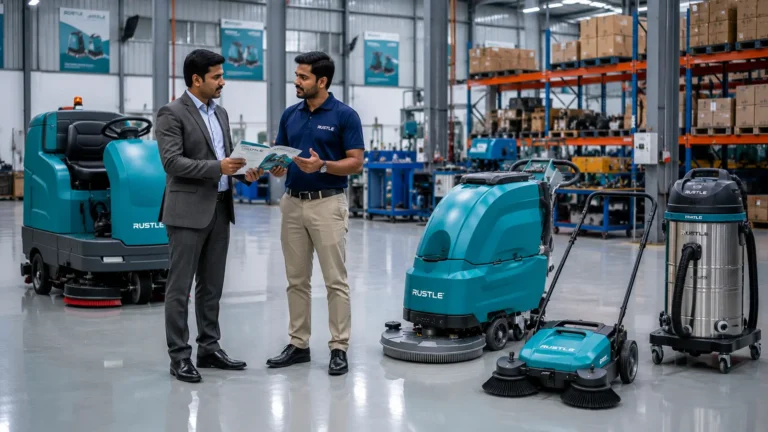
Choosing between a floor scrubber and sweeper depends on your facility’s cleaning requirements. Industrial sweepers are ideal for removing loose dry debris such as dust, sand, metal particles, leaves, and packaging waste from factories, warehouses, workshops, and parking areas. Floor scrubbers and scrubber dryers are better suited for removing oil, grease, stubborn dirt, stains, and adhered contamination using water, detergent, and mechanical scrubbing. For facilities with both dry debris and stubborn floor contamination, using a sweeper before a scrubber can provide better results. Rustle Clean Care offers manual, battery-operated, and ride-on sweepers, scrubber dryers, industrial vacuum cleaners, and single-disc scrubbers for Indian industries.
Choosing industrial cleaning equipment is not as simple as picking the machine with the biggest cleaning capacity or the lowest price.
A factory floor covered with metal dust needs a different solution from a warehouse with pallet debris. A manufacturing plant with oil marks and stubborn stains needs different equipment again.
This is why one question comes up frequently among facility managers and procurement teams:
Should we buy a floor scrubber or a sweeper?
The short answer is simple: a sweeper removes loose dry dirt and debris, while a floor scrubber cleans the floor with water, detergent and mechanical scrubbing.
For many larger facilities, the best cleaning process may actually involve both machines.
What Is the Difference Between a Floor Scrubber vs Sweeper?
The primary difference is the type of cleaning each machine performs.
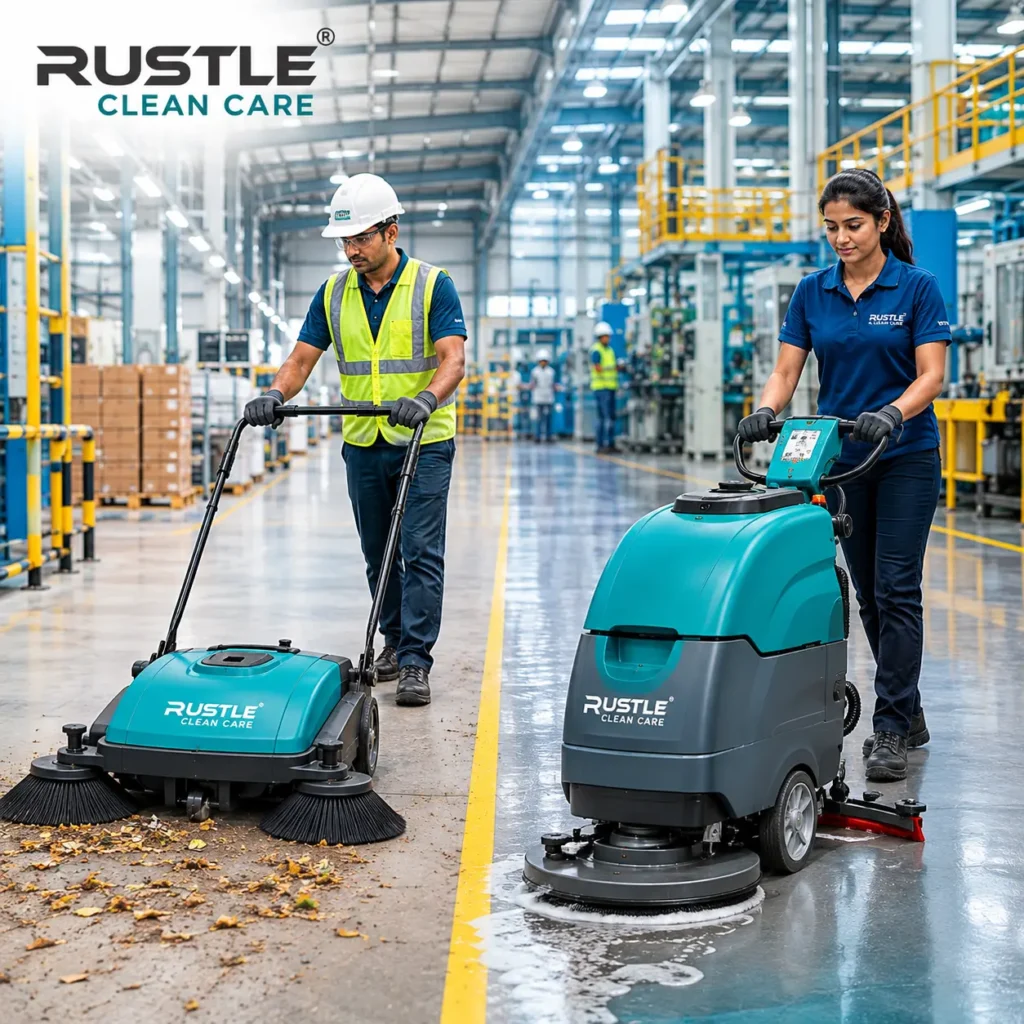
A floor sweeper is designed to collect loose dirt such as dust, sand, small particles, leaves, packaging material and other dry debris.
A floor scrubber or scrubber dryer uses water, cleaning solution and brushes or pads to remove dirt that is attached to the floor. The recovery system then collects dirty water, leaving the surface much cleaner and, depending on the machine, dry enough for normal traffic.
Professional cleaning manufacturers commonly separate these functions because the machines solve different cleaning problems. Rustle Clean Care, for example, categorizes professional equipment into sweepers and scrubber driers, while IPC highlights the importance of evaluating floor area, cleaning frequency and obstacles before selecting a machine.
Floor Sweeper: When Should You Use One?
A sweeper is the better choice when your main problem is loose dry debris.
Typical applications include:
- Manufacturing plants
- Engineering workshops
- Warehouses
- Logistics centres
- Parking areas
- Loading zones
- Automobile facilities
- Textile factories
- Foundries
- Outdoor industrial areas
What Can an Industrial Sweeper Remove?
An industrial sweeper can be used for materials such as:
- Dust
- Sand
- Small metal particles
- Packaging waste
- Wood particles
- Leaves
- Loose production debris
- General dry dirt
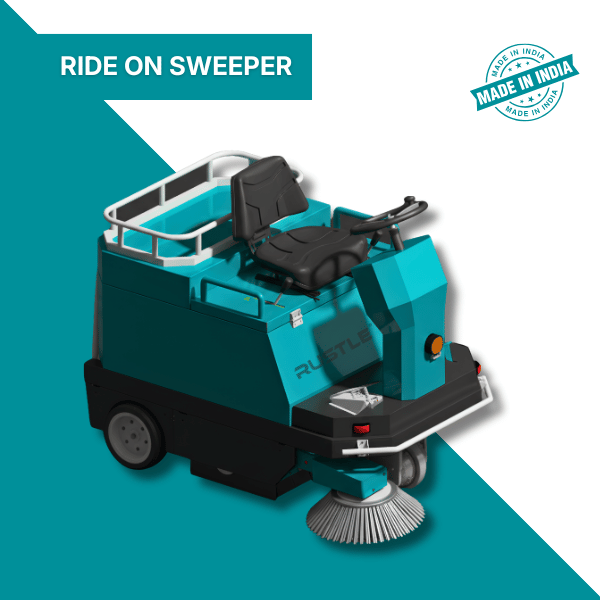
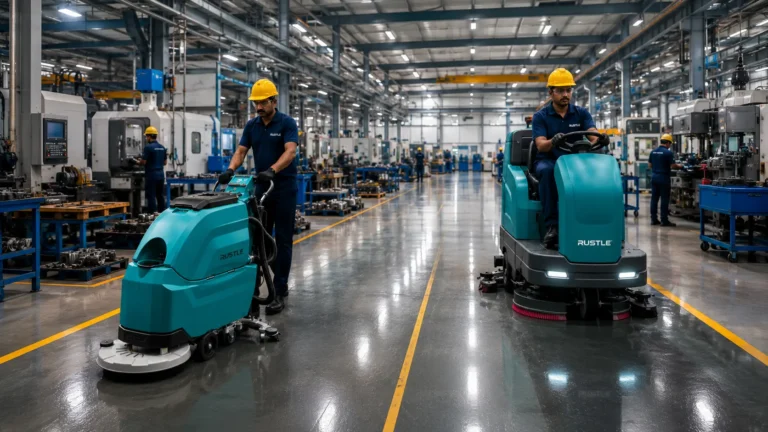
For large facilities, a ride-on sweeper can cover extensive floor areas while reducing the physical effort required from cleaning staff.
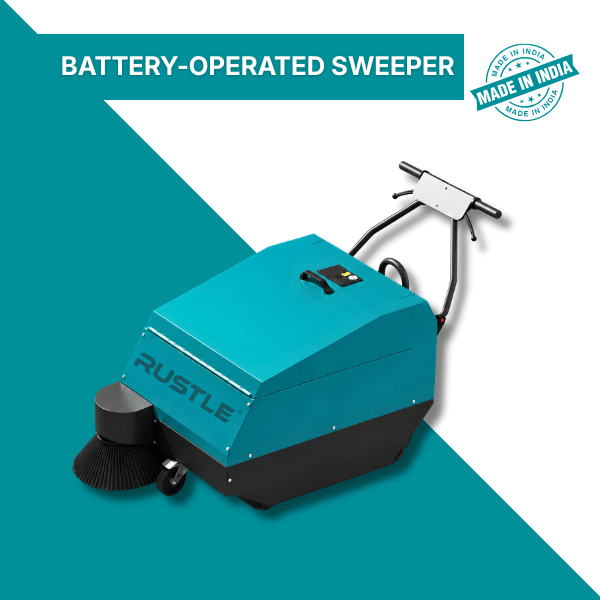
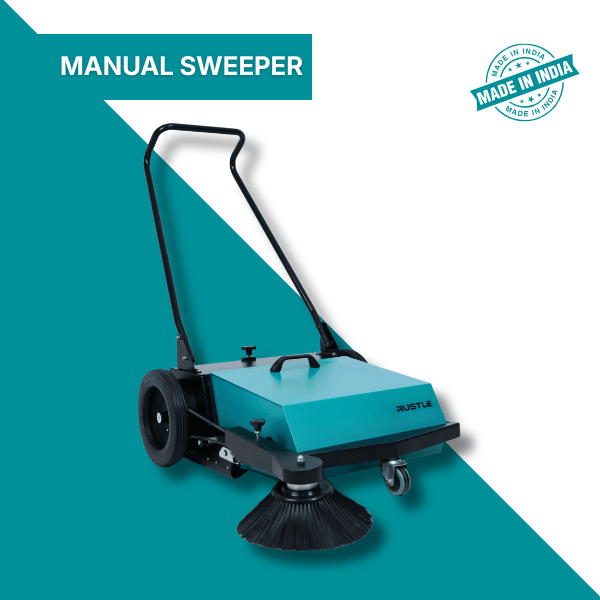
For smaller or more congested areas, a manual sweeper or battery operated sweeper can provide a more practical solution.
Rustle’s professional range similarly positions walk-behind sweepers for workshops, halls and industrial applications, while ride-on sweepers are intended for medium and large areas.
Floor Scrubber: When Should You Use One?
A floor scrubber is the better option when loose dust is not your only problem.
If your facility has:
- Oil marks
- Grease
- Mud
- Footprints
- Dried dirt
- Stubborn stains
- Industrial residue
- Heavy floor traffic
a scrubber dryer can provide a deeper clean than dry sweeping alone.
The machine applies cleaning solution to the floor, agitates the surface with brushes or pads and removes the dirty water through its suction system.
This makes a scrubber dryer particularly useful in:
- Automotive plants
- Manufacturing facilities
- Hospitals
- Food processing plants
- Warehouses
- Shopping malls
- Pharmaceutical facilities
- Commercial buildings
Floor Scrubber vs Sweeper: Quick Comparison
| Feature | Industrial Sweeper | Floor Scrubber |
|---|---|---|
| Main purpose | Removes loose debris | Deep-cleans hard floors |
| Cleaning method | Dry sweeping | Water + detergent + scrubbing |
| Dust | Excellent | Limited |
| Metal particles | Excellent | Not the primary application |
| Oil stains | Limited | Better suited |
| Grease | Limited | Better suited |
| Wet cleaning | No | Yes |
| Dry debris | Excellent | Usually requires pre-sweeping |
| Large warehouses | Excellent | Excellent for subsequent wet cleaning |
| Factory floors | Excellent for debris | Excellent for stains and dirt |
| Best use | Dry cleaning | Deep floor cleaning |
Which Is Better for a Factory?
Recommended Rustle Clean Care Products
A clean production environment improves efficiency while creating a safer workplace for employees.
There is no single answer.
The right machine depends on the type of contamination, floor area, layout and cleaning frequency.
Choose a Sweeper If:
- Your main problem is dust.
- The floor contains loose production debris.
- You need regular dry cleaning.
- You operate a warehouse or logistics facility.
- Your cleaning area is large.
- You want to remove debris before wet cleaning.
Choose a Scrubber Dryer If:
- Your floor has oil or grease.
- You need deep cleaning.
- The floor requires regular washing.
- You need to remove stubborn dirt.
- Hygiene is a priority.
- You want to leave the floor cleaner and ready for use.
Choose Both If:
Your facility produces both loose debris and stubborn floor contamination.
This is common in manufacturing and logistics environments.
Why Using a Sweeper Before a Scrubber Can Make Sense
One of the most useful cleaning strategies for industrial facilities is:
Sweep first → Scrub second.
Why?
Loose particles can interfere with the wet-cleaning process. Pre-sweeping removes larger debris before the scrubber dryer performs its deeper cleaning.
Rustle describes this two-stage approach for industrial and logistics environments: sweeping removes coarse and loose contamination first, followed by wet scrubbing for stubborn dirt.
IPC also recommends pre-sweeping before using a scrubber dryer as part of its floor-cleaning process.
This approach can be especially useful in:
- Automotive manufacturing
- Engineering plants
- Warehouses
- Metal fabrication
- Logistics facilities
- Heavy machinery plants
Walk Behind or Ride-On Cleaning Machine?
Once you decide between sweeping and scrubbing, there is another important question:
Should you choose a walk-behind machine or a ride-on machine?
Walk Behind Machines
Walk-behind equipment is generally more practical where the facility has:
- Smaller cleaning areas
- Narrow aisles
- Machinery around the floor
- Multiple obstacles
- Tight corners
- Restricted access
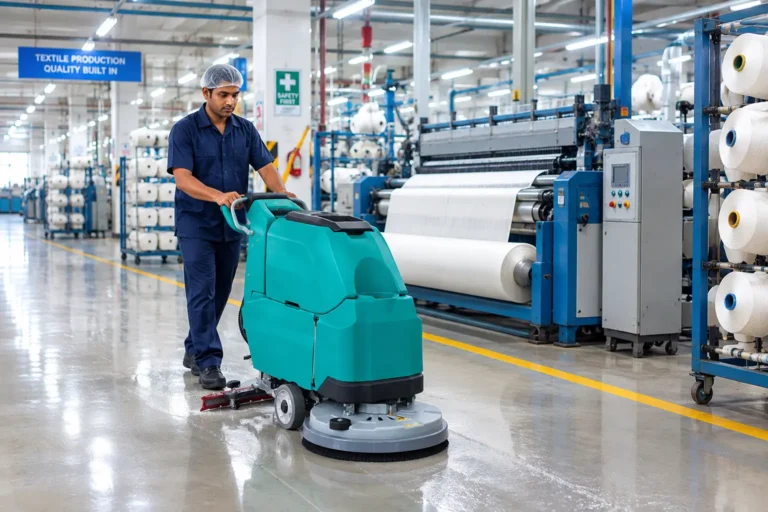
A walk-behind scrubber dryer gives the operator direct control and can be easier to maneuver around equipment.
Ride-On Machines
A ride-on cleaning machine becomes attractive when the facility has:
- Large open floors
- Long aisles
- Large warehouses
- Manufacturing halls
- Shopping malls
- Logistics centres
- Extensive parking or industrial areas
The operator can sit on the machine while covering large areas efficiently.
IPC recommends considering floor area, cleaning time and obstacles when deciding between walk-behind and ride-on equipment. Its guidance notes that very large open areas may benefit from ride-on equipment, while smaller or obstructed spaces can be better suited to walk-behind machines.
How to Choose the Right Industrial Cleaning Machine
Before contacting an industrial cleaning equipment manufacturer, answer these seven questions.
1. How large is the cleaning area?
Measure the actual floor area rather than estimating it.
2. What type of dirt do you collect?
Dust and debris point toward a sweeper. Oil, grease and adhered dirt may require a scrubber dryer.
3. What is the floor surface?
Consider concrete, epoxy, tiles, stone or other industrial flooring.
4. How often will the machine operate?
Daily multi-shift cleaning requires equipment designed for regular professional use.
5. Are there narrow aisles or obstacles?
A compact walk-behind machine may be more practical than a large ride-on unit.
6. How much downtime is available?
If cleaning must be completed during a short production break, machine productivity becomes particularly important.
7. What after-sales support is available?
Ask about:
- Genuine spare parts
- Operator training
- Installation
- Technical support
- Preventive maintenance
- Service availability
Rustle Clean Care highlights distributor support, machine installation, operator training, scheduled maintenance, genuine spare parts and technical assistance as part of its support offering.
Rustle Clean Care Cleaning Machines for Indian Industries
Rustle Clean Care offers a range of industrial cleaning machines in India for different floor-cleaning requirements.
The product range includes:
- Manual Sweeper – suitable for practical dry sweeping applications.
- Battery Operated Sweeper – useful for regular cleaning where cordless operation is preferred.
- Ride On Sweeper – designed for larger cleaning areas.
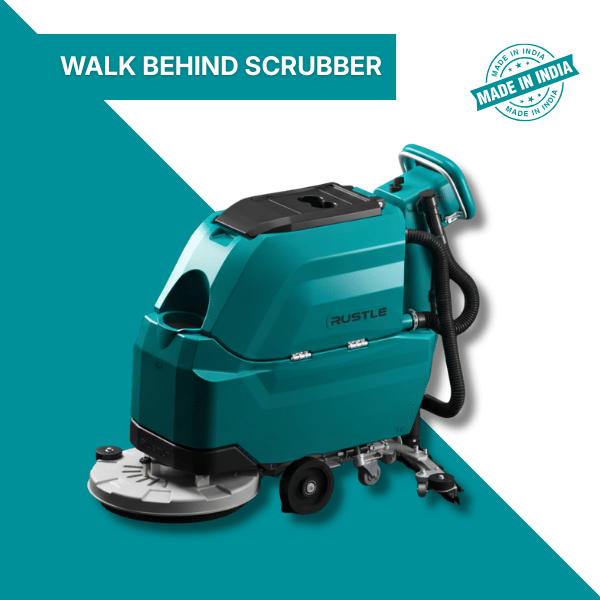
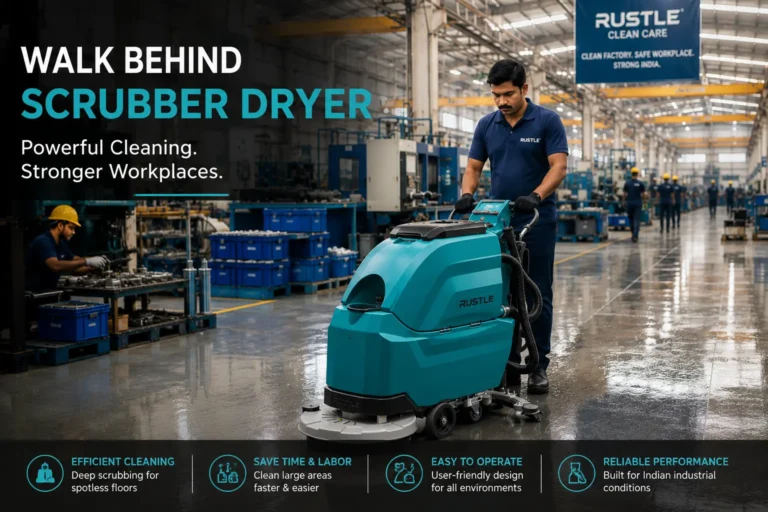
- Walk Behind Scrubber Dryer – suitable for wet floor cleaning and scrubbing applications.
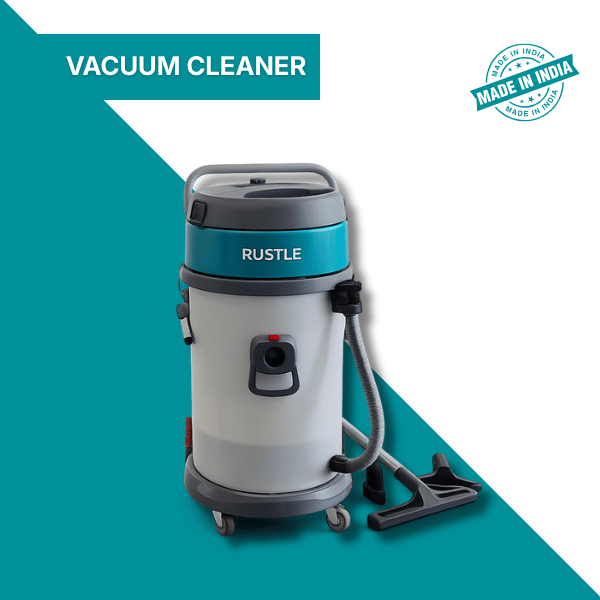
- Industrial Vacuum Cleaner – useful for dust and debris collection.
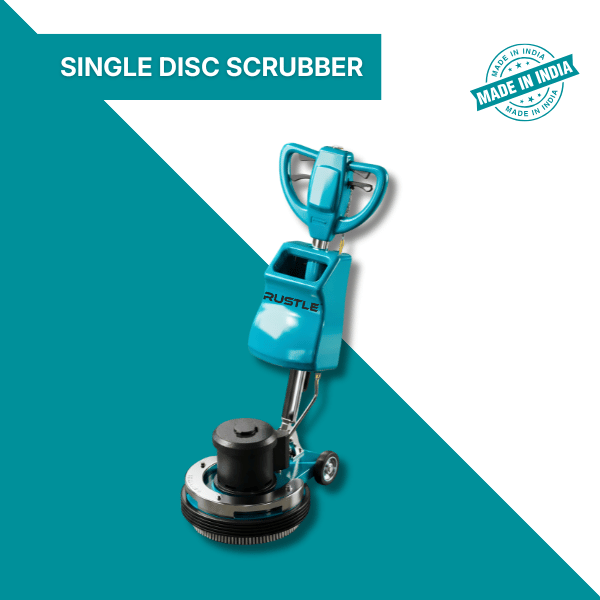
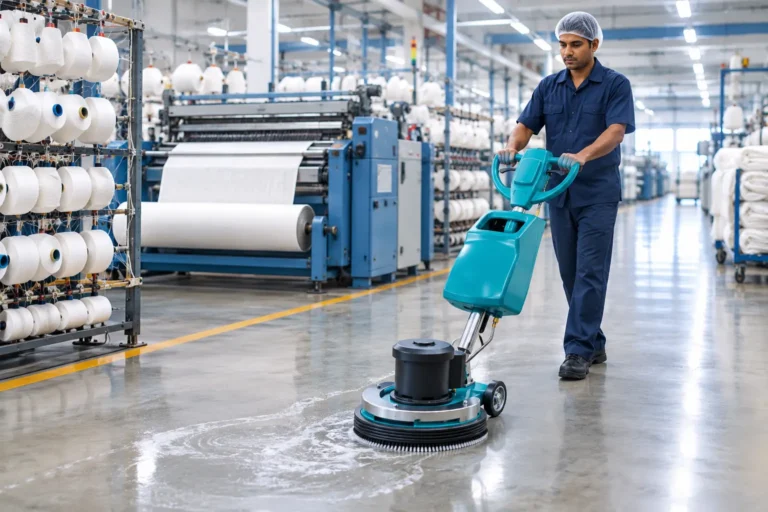
- Single Disc Scrubber – suitable for intensive floor maintenance and scrubbing applications.
Rustle Clean Care positions its machines for industrial and commercial environments and serves applications including warehouses, hospitals, airports, shopping malls and other facilities.
Which Machine Should You Buy?
Use this simple guide:
| Your Cleaning Problem | Recommended Equipment |
| General warehouse dust | Battery Operated Sweeper |
| Loose factory debris | Industrial Sweeper |
| Large warehouse floor | Ride On Sweeper |
| Small workshop | Manual Sweeper |
| Oil and grease | Walk Behind Scrubber Dryer |
| Deep floor cleaning | Scrubber Dryer |
| Fine industrial dust | Industrial Vacuum Cleaner |
| Floor polishing and maintenance | Single Disc Scrubber |
| Mixed dry and wet contamination | Sweeper + Scrubber Dryer |
Common Buying Mistakes
Buying Based Only on Price
The cheapest machine may not be the most economical machine over its operating life.
Choosing the Wrong Machine Type
A sweeper cannot replace a scrubber when the primary problem is stubborn wet or adhered contamination.
Ignoring Floor Layout
A large machine may perform well in an open warehouse but become difficult to operate around production equipment.
Forgetting Service Support
Before buying industrial cleaning equipment, check whether spare parts and technical support are available.
Choosing Too Much Capacity
Buying a machine that is significantly larger than your actual requirement can unnecessarily increase purchase and operating costs.
Final Verdict: Floor Scrubber or Sweeper?
The answer depends on what you need to remove.
Choose an industrial sweeper for loose, dry dirt and debris.
Choose a floor scrubber for deeper cleaning, stains, grease and adhered dirt.
Choose both when your facility experiences a mixture of dry debris and stubborn floor contamination.
For Indian factories, warehouses and commercial facilities, the best investment is not necessarily the biggest cleaning machine. It is the machine that matches your floor, dirt type, available cleaning time and operating environment.
If you are comparing industrial cleaning machines in India, speak with a manufacturer or distributor that can assess your application before you purchase.
Looking for the right industrial cleaning equipment for your facility? Explore Rustle Clean Care’s range of sweepers, scrubber dryers and industrial vacuum cleaners, or contact the team for product guidance.
FAQs
1. Is a floor scrubber better than a sweeper?
Neither machine is universally better. A sweeper is better for loose dry debris, while a scrubber dryer is better for deep cleaning and removing adhered dirt.
2. Can a sweeper clean oil stains?
A sweeper is primarily designed for loose debris. Oil and grease generally require a wet-cleaning process using an appropriate scrubber dryer and cleaning solution.
3. Can I use a scrubber without sweeping first?
It depends on the floor condition. If there is significant loose debris, pre-sweeping is recommended because it allows the scrubber dryer to focus on wet cleaning.
4. Which machine is best for a large warehouse?
A ride-on sweeper is suitable for large areas containing loose debris. If the warehouse also needs wet floor cleaning, a ride-on scrubber dryer can be added.
5. What is the best machine for a manufacturing plant?
It depends on the contamination. Manufacturing plants with dry dust and debris may need sweepers or industrial vacuum cleaners, while floors with oil and adhered dirt may benefit from scrubber dryers.
6. Are walk-behind scrubber dryers suitable for factories?
Yes. They can be useful in medium-sized or obstructed areas where maneuverability is important.
7. Should factories buy a sweeper and scrubber?
For facilities with both dry debris and stubborn floor contamination, using both machines can provide a more complete cleaning process.
8. Where can I buy industrial cleaning machines in India?
You can purchase industrial cleaning equipment directly from manufacturers or through authorized distributors. Rustle Clean Care offers industrial and commercial cleaning machines and distributor support across India.