
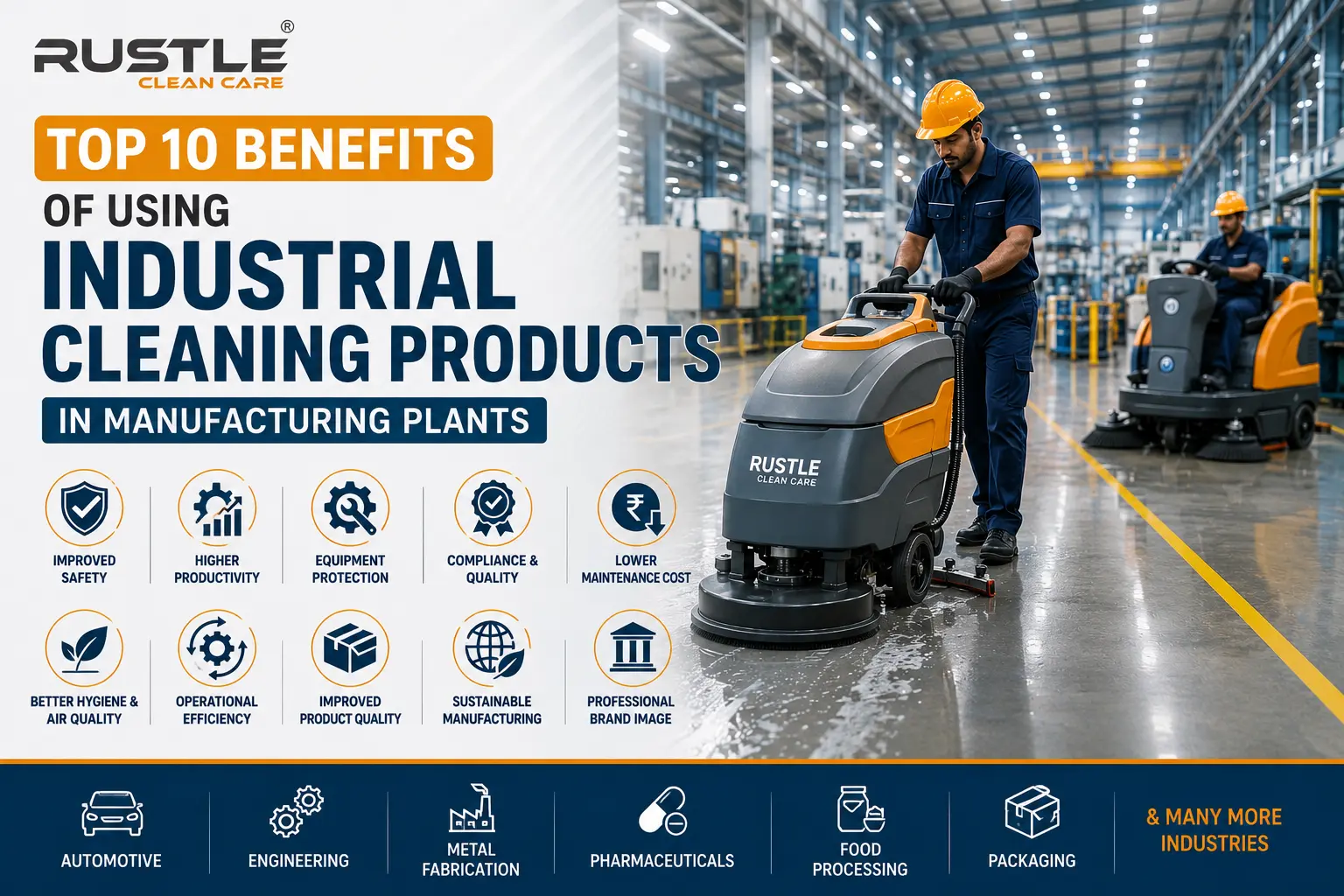
Top 10 Benefits of Using Industrial Cleaning Products in Manufacturing Plants
Blog Summary
Manufacturing plants face constant challenges such as dust, grease, oil spills, and production waste that can impact safety, productivity, and equipment performance. Industrial cleaning products and machines help maintain cleaner, safer, and more efficient work environments. From reducing workplace accidents and maintenance costs to improving product quality and regulatory compliance, professional cleaning solutions play a vital role in daily operations. They also enhance indoor air quality, extend equipment lifespan, and support sustainable manufacturing practices. Investing in the right industrial cleaning products enables factories to optimize performance, protect assets, and create a safer, more productive workplace for employees and visitors alike.
Manufacturing plants operate in demanding environments where dust, grease, oil, metal particles, chemical residues, and production waste accumulate every day. While production efficiency often receives the most attention, cleanliness plays an equally important role in maintaining workplace safety, product quality, equipment performance, and regulatory compliance.
Many factory owners and plant managers still rely on manual cleaning methods that consume time, increase labor costs, and deliver inconsistent results. Industrial cleaning products and cleaning equipment help manufacturing facilities maintain high hygiene standards while improving overall operational efficiency.
In this article, we’ll explore the top benefits of using industrial cleaning products in manufacturing plants and why they have become an essential investment for modern industries across India.
What Are Industrial Cleaning Products?
Industrial cleaning products are specialized cleaning solutions, chemicals, machines, and equipment designed to remove heavy dirt, grease, oil, dust, debris, and contaminants commonly found in manufacturing environments.
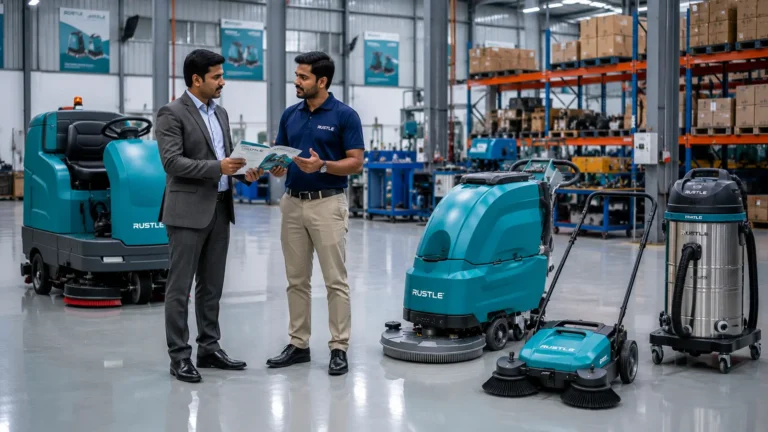
These products include:
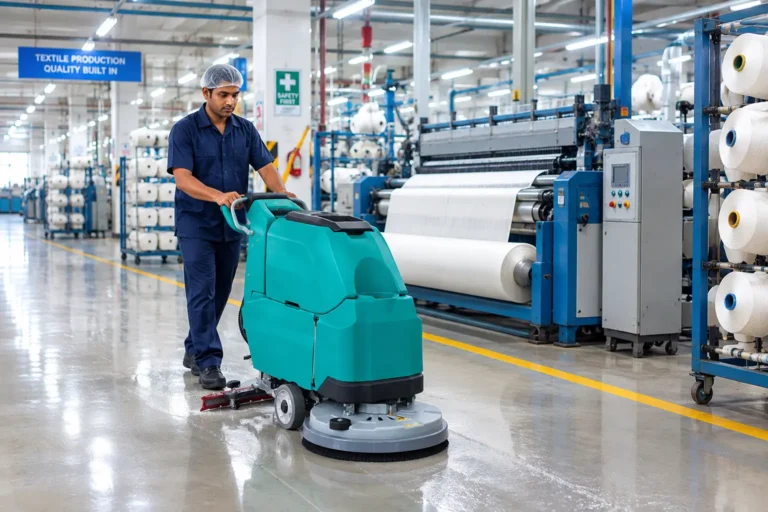
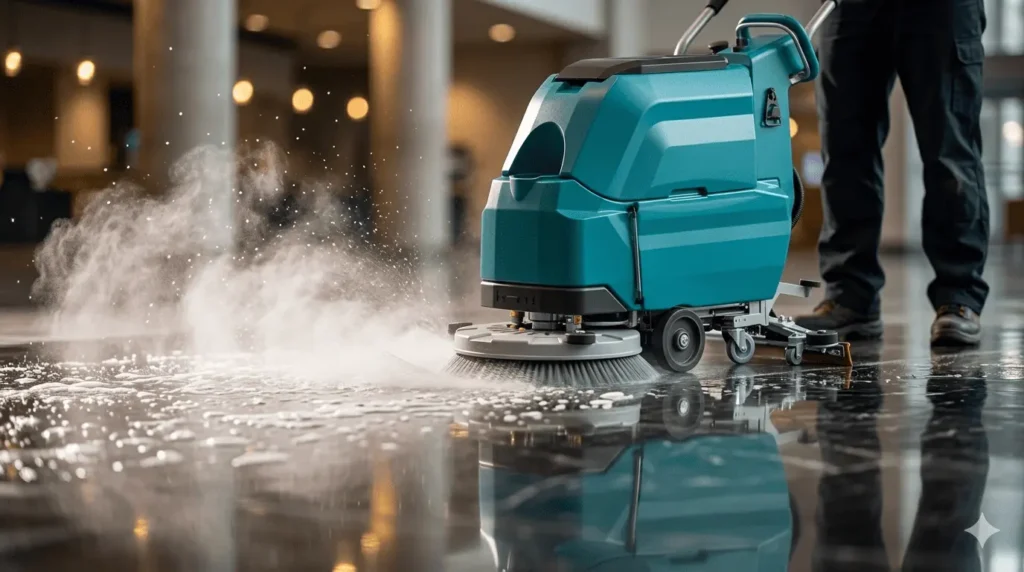
- Industrial scrubber dryers
- Industrial vacuum cleaners
- Ride-on sweepers
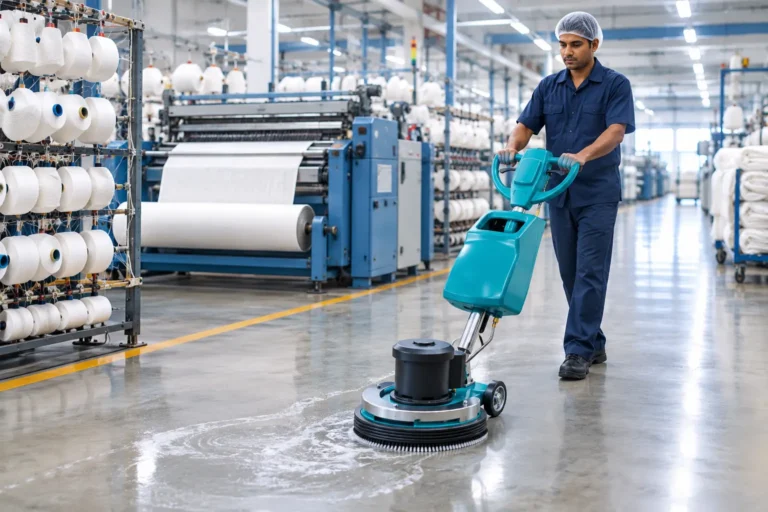
- Single-disc scrubbers
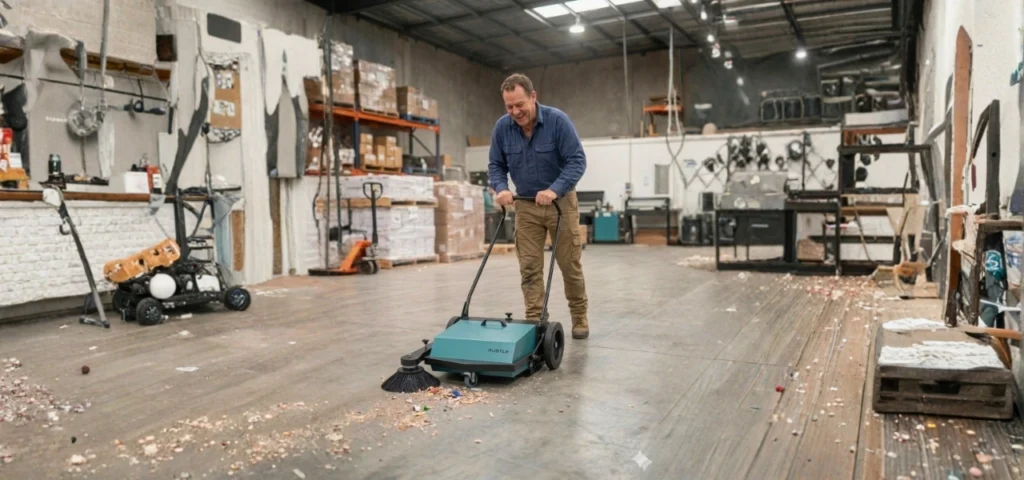
- Industrial sweepers
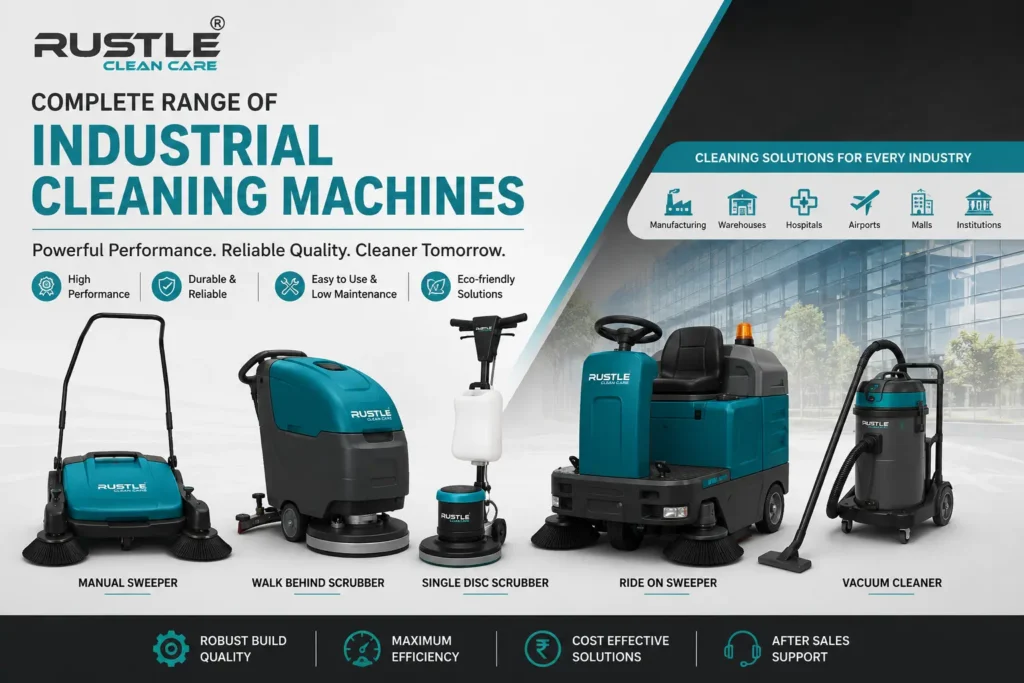
Unlike conventional cleaning products, industrial cleaning solutions are built to handle demanding factory conditions efficiently.
1. Improves Workplace Safety
Safety is a top priority in every manufacturing facility.
Dirty floors can create hazards such as the following:
- Slips and falls
- Oil spills
- Dust accumulation
- Obstructed pathways
- Equipment-related accidents
Industrial cleaning products help maintain clean and dry surfaces, reducing workplace accidents and supporting safer operations.
Example
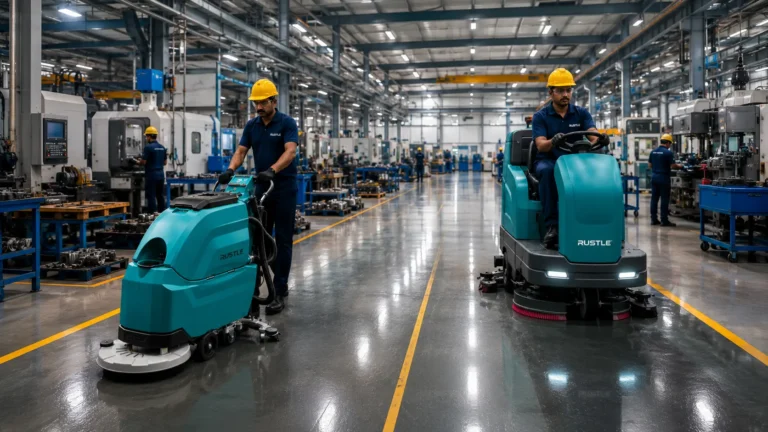
An automotive manufacturing plant using industrial scrubber dryers can quickly remove oil spills from production floors, significantly lowering slip hazards.
2. Enhances Employee Productivity
Employees perform better in clean and organized environments.
When work areas remain free from dust, debris, and clutter:
- Movement becomes easier
- Equipment access improves
- Downtime decreases
- Employee morale increases
A cleaner workplace helps teams focus on production rather than dealing with avoidable cleaning issues.
3. Extends Equipment Life
Manufacturing equipment represents a major investment.
Dust, grease, and contaminants can
- Damage machine components
- Cause overheating
- Increase wear and tear
- Lead to unexpected breakdowns
Regular cleaning with industrial cleaning products helps protect machinery and reduce maintenance expenses.
Industries Benefiting Most
- Automotive manufacturing
- Engineering industries
- Metal fabrication units
- Aerospace component manufacturers
4. Supports Regulatory Compliance
Many industries must comply with strict cleanliness and safety regulations.
Examples include:
- ISO standards
- GMP guidelines
- Food safety regulations
- Occupational safety requirements
Industrial cleaning products help organizations maintain compliance and prepare for audits with confidence.
5. Improves Product Quality
Contaminants can directly affect finished products.
Dust particles, oil residues, and airborne debris may result in:
- Product defects
- Customer complaints
- Rework costs
- Production losses
Maintaining a clean production environment helps ensure consistent product quality.
Industries Where This Is Critical
| Industry | Importance of Cleanliness |
|---|---|
| Pharmaceuticals | Prevent contamination |
| Electronics | Protect sensitive components |
| Food Processing | Maintain hygiene standards |
| Packaging | Ensure product integrity |
6. Reduces Maintenance Costs
Preventive cleaning often costs far less than emergency repairs.
Industrial cleaning products help:
- Prevent equipment failures
- Reduce servicing frequency
- Minimize replacement costs
- Improve asset utilization
Facilities that implement routine cleaning programs typically experience lower maintenance expenses over time.
7. Increases Operational Efficiency
A clean facility functions more efficiently.
Benefits include:
- Faster workflow
- Better material handling
- Reduced downtime
- Improved inventory management
Clean manufacturing environments support smoother operations across departments.
8. Improves Indoor Air Quality
Dust and airborne contaminants can affect employee health and productivity.
Industrial vacuum cleaners and dust-control solutions help:
- Reduce airborne particles
- Improve breathing conditions
- Enhance employee comfort
- Support occupational health standards
This is especially important in:
- Textile industries
- Foundries
- Metal fabrication plants
- Chemical processing facilities
9. Creates a Professional Brand Image
Visitors, customers, auditors, and stakeholders often judge a facility by its cleanliness.
A well-maintained manufacturing plant demonstrates:
- Professionalism
- Operational discipline
- Quality commitment
- Safety awareness
Clean facilities leave a positive impression on customers and business partners.
10. Supports Sustainable Manufacturing
Modern industrial cleaning products are designed to reduce:
- Water consumption
- Chemical usage
- Energy waste
Many advanced cleaning machines now offer eco-friendly features that help manufacturers achieve sustainability goals while maintaining high cleaning standards.
Comparison: Manual Cleaning vs Industrial Cleaning Products
| Factor | Manual Cleaning | Industrial Cleaning Products |
| Cleaning Speed | Slow | Fast |
| Labor Requirement | High | Low |
| Consistency | Variable | Consistent |
| Safety | Moderate | High |
| Water Usage | High | Optimized |
| Productivity Impact | Lower | Higher |
| Long-Term Cost | Higher | Lower |
Key Takeaways
- Cleaner plants improve workplace safety.
- Industrial cleaning products increase productivity.
- Equipment lifespan improves significantly.
- Product quality becomes more consistent.
- Regulatory compliance becomes easier.
- Maintenance costs decrease.
- Sustainability goals become achievable.
- Professional facility appearance improves business reputation.
Common Mistakes to Avoid
Using Household Cleaners in Industrial Environments
They are not designed for heavy-duty contaminants.
Delaying Regular Cleaning
Accumulated dirt becomes harder and more expensive to remove.
Ignoring Equipment Maintenance
Cleaning machines require routine servicing for optimal performance.
Choosing Products Based Only on Price
Quality and durability should be primary considerations.
Not Training Operators
Proper machine operation improves cleaning results and machine life.
Expert Tips
- Create a scheduled cleaning plan.
- Use dedicated equipment for different areas.
- Conduct weekly facility inspections.
- Invest in industrial-grade cleaning machines.
- Train staff on cleaning best practices.
- Track cleaning performance metrics.
- Use eco-friendly cleaning solutions whenever possible.
Frequently Asked Questions
1. Why are industrial cleaning products important in manufacturing plants?
They help maintain workplace safety, improve productivity, protect equipment, and ensure regulatory compliance.
2. Which industries benefit most from industrial cleaning products?
Automotive, pharmaceuticals, food processing, textiles, engineering, electronics, and chemical industries benefit significantly.
3. How often should manufacturing plants perform industrial cleaning?
High-traffic areas should be cleaned daily, while deep cleaning schedules may vary based on operational requirements.
4. Can industrial cleaning products reduce maintenance costs?
Yes. Regular cleaning prevents equipment damage and reduces repair expenses.
5. Are industrial cleaning products environmentally friendly?
Many modern industrial cleaning solutions are designed to minimize water and chemical consumption.
6. What is the best equipment for factory floor cleaning?
Scrubber dryers, industrial sweepers, and vacuum cleaners are commonly used.
7. How do industrial cleaning products improve worker safety?
They remove hazards such as dust, grease, oil spills, and debris that can cause accidents.
Conclusion
Industrial cleaning is no longer just a housekeeping task. It is a strategic investment that directly impacts safety, productivity, equipment performance, product quality, and operational efficiency.
For manufacturing plants across India, adopting the right industrial cleaning products and equipment can deliver measurable long-term benefits while supporting compliance and sustainability goals.
If you’re looking to improve factory cleanliness, reduce downtime, and create a safer workplace, investing in professional industrial cleaning solutions is a smart step toward operational excellence.